
Christie's buys British auction house Dreweatts to reclaim the antiques market
Dreweatts keeps its name, its Newbury salesroom and its leadership under the deal.


Christie's announced on 25 November that it has acquired Dreweatts, the British regional auction house known for antiques and older collectibles. The deal returns the world's leading auctioneer to a corner of the market it abandoned in 2017 when it closed its South Kensington rooms.
Both businesses continue as before, Christie's confirms, with no staffing changes expected. Dreweatts keeps its name and carries on under chief executive Henry House and chairman Will Richards, running "independently," in the words of the Christie's statement.
Sales stay in place too. Dreweatts continues to operate from its salesroom at Donnington Priory in Newbury, Berkshire, and nothing moves to London. That leaves the house's regional specialists exactly where its country house and estate clients expect to find them.
Dreweatts was founded in 1759 and runs around 70 sales a year across furniture, Old Masters, ceramics, jewellery, silver, clocks and wine. In 2025 it posted a record auction turnover of £37.56m, rising to £47.3m once fees are included, up 26% on 2024.
Why Christie's is buying an antiques house
Christie's, established in 1766 and the auctioneer that holds the all-time record of $450.3m for da Vinci's Salvator Mundi, is buying back expertise it shed during a very different market. The 2017 closure of Christie's South Kensington marked a chase after postwar and contemporary art and global expansion.
That retreat cost the house its foothold in traditional collecting categories and, critics said at the time, its benches of specialist knowledge and its route to new buyers. Dreweatts restores exactly that: connoisseurship, localism and a client base that buys across categories at every price point.
The timing fits the economics. High-value Modern and postwar trophy consignments generate headlines, but the overheads required to win them eat into profit margins. High-volume antiques sales, by contrast, carry lower glamour and lower costs.
The terms and the seller
Christie's buys Dreweatts from the advisory firm Gurr Johns, which paid £1.25m for the house in 2017. Both Christie's and Dreweatts are privately owned and disclose no profits, so the acquisition price remains unreported.
Christie's president Bonnie Brennan said Dreweatts has "particular strength in a part of the market that is highly complementary to our own. Most importantly, our clients collect across categories and at every price point, and together we have the opportunity to provide them with an even broader and more complete level of service."
The Gurr Johns chief told the Financial Times he believed Christie's was "the only business with the capacity, experience and shared culture to fulfil the further potential of Dreweatts." Neither side has set out a date for completion.
This is the second time Christie's has pulled in a smaller specialist house in recent years. In 2024 it bought Gooding & Company, the American classic car auctioneers, extending its reach into another collecting category with devoted and knowledgeable buyers.
Dreweatts holds around 70 auctions a year from Newbury, and the rooms themselves remain its engine. The house is best known for the dispersal of country house and estate contents, a line of business that prizes the sort of regional presence Christie's closed when it shuttered South Kensington.
Our own rankings place Christie's and Sotheby's at the head of high-end auction houses by record single-lot sales, while Phillips owns contemporary art and watches and Bonhams and Artcurial command record car sales. The Dreweatts purchase fills the antiques and traditional collecting gap beside those strengths.
In watches we have found Christie's and Sotheby's bring the deepest global bidder pools, with Phillips holding an estimated 45% of the watch auction market. Dreweatts does not compete there, but it extends the same principle across furniture, silver, ceramics and clocks.
The deal continues a pattern of auction-house names anchoring premium markets. We have reported that Sotheby's, Christie's and Barnes leverage their brand prestige across networks spanning more than 80 countries in luxury real estate, and the Dreweatts acquisition extends that brand-led reach into a new tier of collecting.
For Christie's the win is straightforward: a profitable, record-setting house bought without moving a single sale to London, with its management left in place and its 26% growth curve intact. The risk is the one critics warned of in 2017, that specialised knowledge is fragile and expensive to rebuild.
What comes next is continuity, by design. No sales move, no staff leave, and Dreweatts keeps its name and its Newbury rooms. The first test of the union will be the next country house sale, where Christie's name now stands behind the catalogue.
Support the content you love — it’s free 🎉
Add Worthbury as a preferred source on Google. Our stories will be more likely to appear in Google’s Top Stories. It’s free and supports our team. Thank you!
Add as preferred sourceYou can remove us any time in Google’s source preferences.
Thank you — you’re all set 🎉
Worthbury is now one of your preferred sources, so our briefings are more likely to appear in Google’s Top Stories.
This briefing is published daily using an AI-powered system crafted by Worthbury's team and finely tuned to meet our editorial standards. While we continuously test and review the output, mistakes can sometimes happen. Tell us if you spot one.
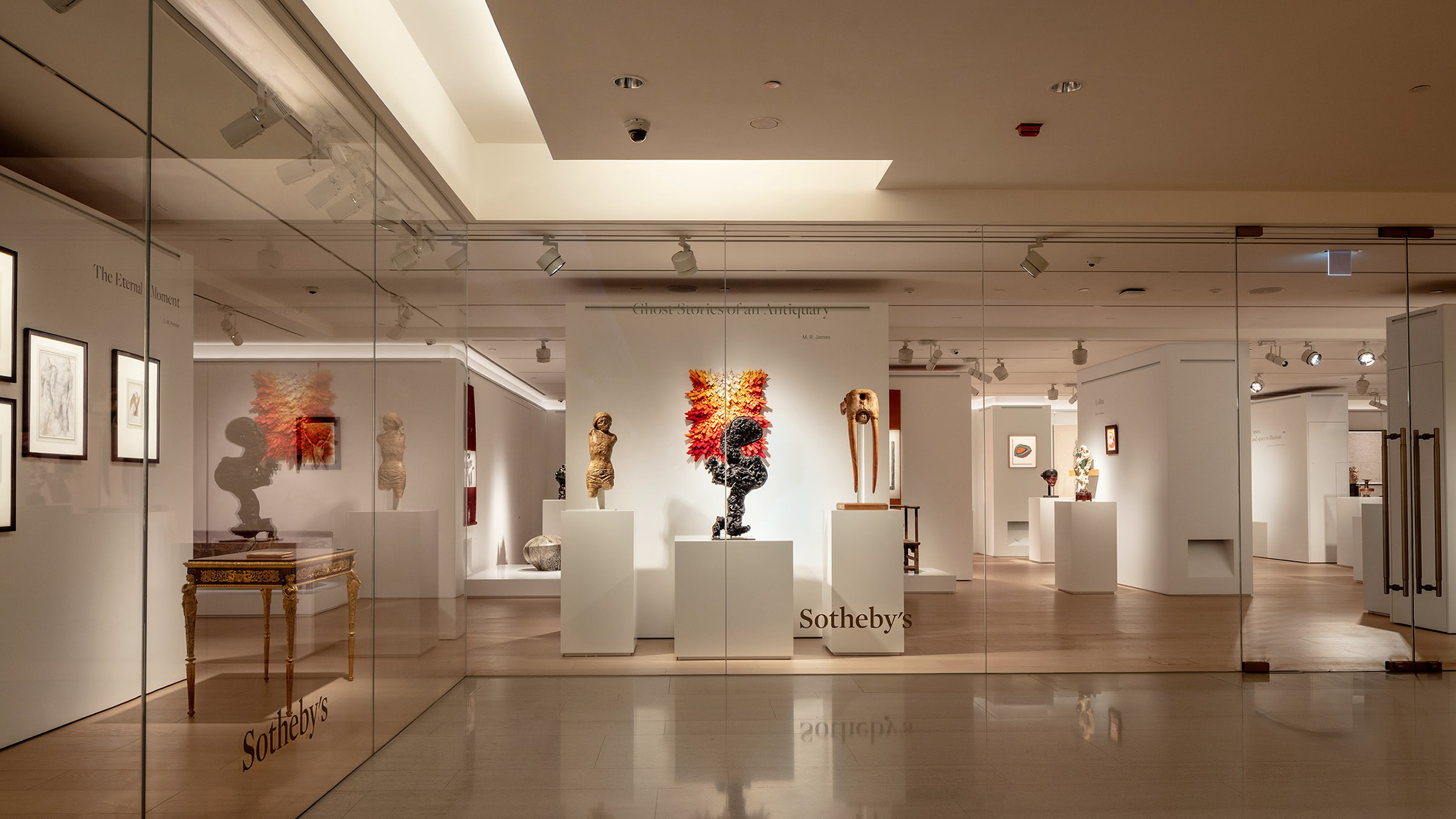
Image: Dreweatts will continue to operate from its Donnington Priory salesroom in Newbury, Berkshire © Christie's