F.P.Journe and Chanel to acquire 95% of Ebel for $66.5 million
Pierre Jacques, formerly chief executive of De Bethune, will run the watchmaker.


Movado Group has agreed to sell 95 percent of Ebel for $66.5 million to a group led by independent watchmaker F.P.Journe, formally Montres Journe SA, with Chanel and veteran watch executive Pierre Jacques participating. The Paramus, New Jersey-based owner confirmed the binding agreement on Thursday.
Jacques, formerly chief executive officer of De Bethune, will become chief executive of Ebel. Movado retains the remaining 5 percent stake in the 95-year-old Swiss watchmaker. The American group makes timepieces for fashion brands including Lacoste, Coach and, most recently, Kate Spade.
What the deal covers
The deal is expected to close in the next few months. Under its terms, a newly formed Movado subsidiary will take over trademarks, other intellectual property and inventory. Also included is Villa Turque, known as Villa Schwob, a historic modernist house in La Chaux-de-Fonds designed by Le Corbusier.
Movado employees dedicated to the Ebel business will become employees of the new entity. Efraim Grinberg, chairman and chief executive of Movado, called Ebel a prestigious brand with rich heritage and carefully curated collections, and said the company was pleased to have found partners who share its appreciation for the brand.
Grinberg added that the transaction reflected the strategic discipline with which Movado manages its portfolio and allocates resources, letting it concentrate on its watch and jewellery brands. He said Ebel was being placed with owners holding the expertise, commitment and long-term perspective to unlock the brand's full potential.
François-Paul Journe, founder of F.P.Journe, drew on Michelangelo for his verdict. "Like Michelangelo and so many others after him: the product, the product, the product," he said, adding that Ebel has always stood for exceptional product and that he is delighted to contribute to its next chapter alongside his friends and partners.
Frédéric Grangié, Chanel's president of watches and fine jewellery, called Ebel one of the great names of Swiss watchmaking, with rich heritage, a distinctive creative identity and a strong foundation for future growth. The investment, he said, reflected the French house's confidence in the brand's long-term potential and its commitment to supporting its development.
Chanel's history in watchmaking investment
Chanel and F.P.Journe already know each other well. Chanel is an investor in F.P.Journe, having acquired a stake in the company in 2018. The French house entered watchmaking with the purchase of manufacturer G&F Châtelain in 1993, then invested in Bell & Ross in 1998.
That pattern continued with a stake in Romain Gauthier in 2011 and one in MB&F in 2024. The Ebel deal extends a long record of building a portfolio of independent and specialist watchmakers, alongside Chanel's own watch and jewellery business under Grangié.
When we covered Chanel's pricing strategy, we found the Medium Classic Flap rising 95 percent in six years to $11,300 while revenue climbed past $19 billion as demand intensified. The house uses price as a gatekeeper, repositioning above accessible-luxury rivals toward Hermès-tier exclusivity, with resale values holding 80 to 100 percent of retail.
We also noted the strategy's first limit in 2024, when revenue fell 4.3 percent and China dropped 9.3 percent, prompting a shift to inflation-aligned 3 percent increases. Chanel, founded by Coco Chanel in 1910, now adds a Swiss watch name to its holdings.
That privacy is itself the point. As our explainer on the Wertheimer family sets out, Alain and Gérard Wertheimer own 100 percent of Chanel, the largest privately held luxury house, with no outside shareholders to answer to. Staying private lets the family hold prices, invest through downturns and think in decades rather than quarters.
We reported last year that Chanel overtook Louis Vuitton as France's most valuable brand, valued at $38 billion against Vuitton's $33 billion. The backing behind Ebel comes from a house that has displaced its chief rival on brand value even as luxury carmakers slid in the rankings amid market volatility.
Movado keeps a seat at the table through its retained 5 percent, but stewardship now belongs to Journe, a maker of high-end timepieces, and to a partner with a long history of patient investment. Journe's own words on the deal were about product, not portfolio.
Jacques brings operational experience from De Bethune, another independent high-end watchmaker, into the chief executive role. His appointment pairs an operator with Journe's product focus and Chanel's capital, a structure Grangié framed as preserving the craftsmanship, excellence and values that have defined Ebel for generations.
The transfer of trademarks, inventory and the Le Corbusier-designed Villa Turque leaves the new entity with both the brand's heritage and its physical assets in watchmaking country. Employees moving across with the business carry operational continuity through the closing, expected in the coming months.
Support the content you love — it’s free 🎉
Add Worthbury as a preferred source on Google. Our stories will be more likely to appear in Google’s Top Stories. It’s free and supports our team. Thank you!
Add as preferred sourceYou can remove us any time in Google’s source preferences.
Thank you — you’re all set 🎉
Worthbury is now one of your preferred sources, so our briefings are more likely to appear in Google’s Top Stories.
This briefing is published daily using an AI-powered system crafted by Worthbury's team and finely tuned to meet our editorial standards. While we continuously test and review the output, mistakes can sometimes happen. Tell us if you spot one.
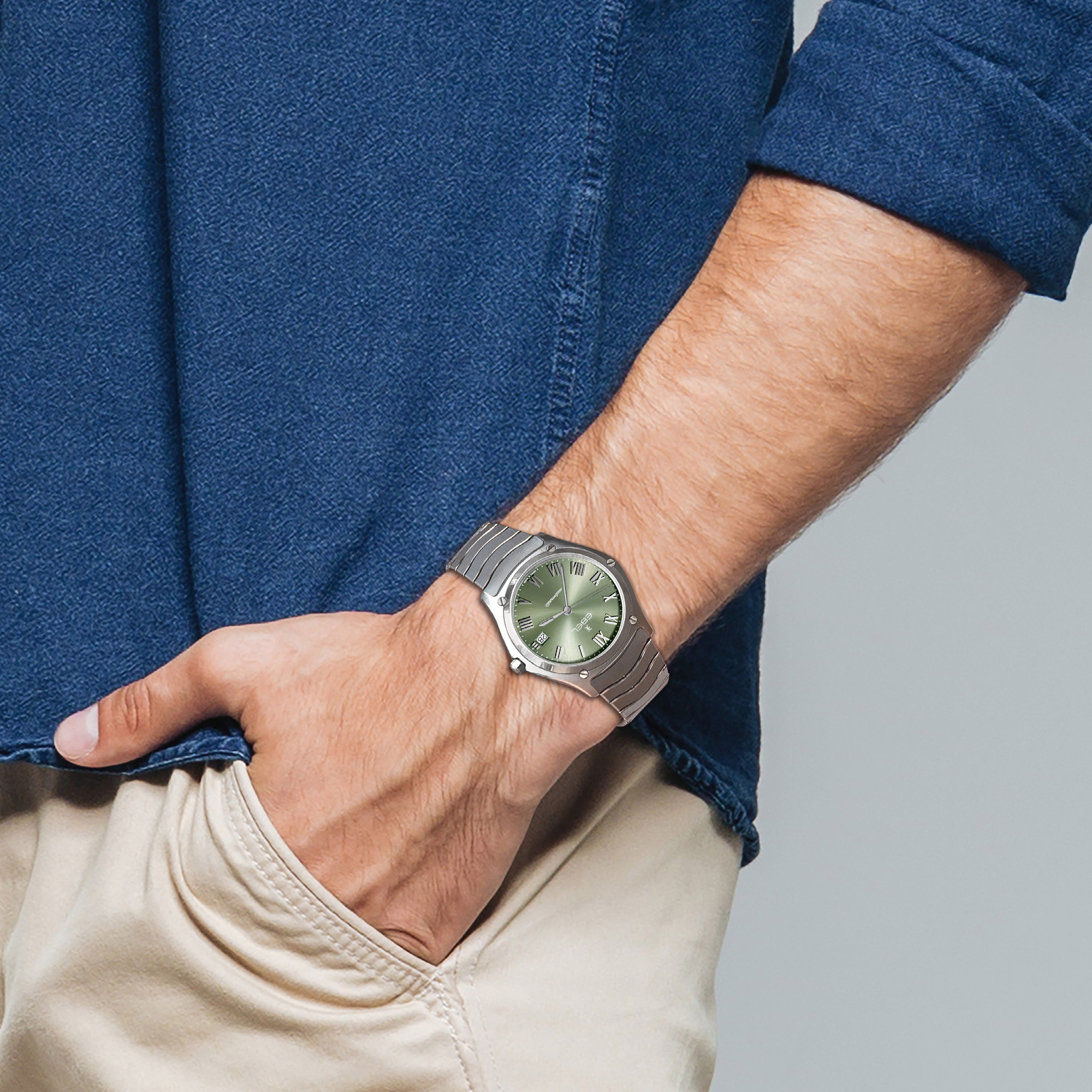
Images: Ebel; Ebel Sport Classic in 37mm, seen in Emily in Paris Courtesy of Ebel