
Lufthansa signs €1.03bn deal for a 44.9% stake in TAP Air Portugal
Lisbon becomes the German group's seventh hub, with completion not expected until 2028.


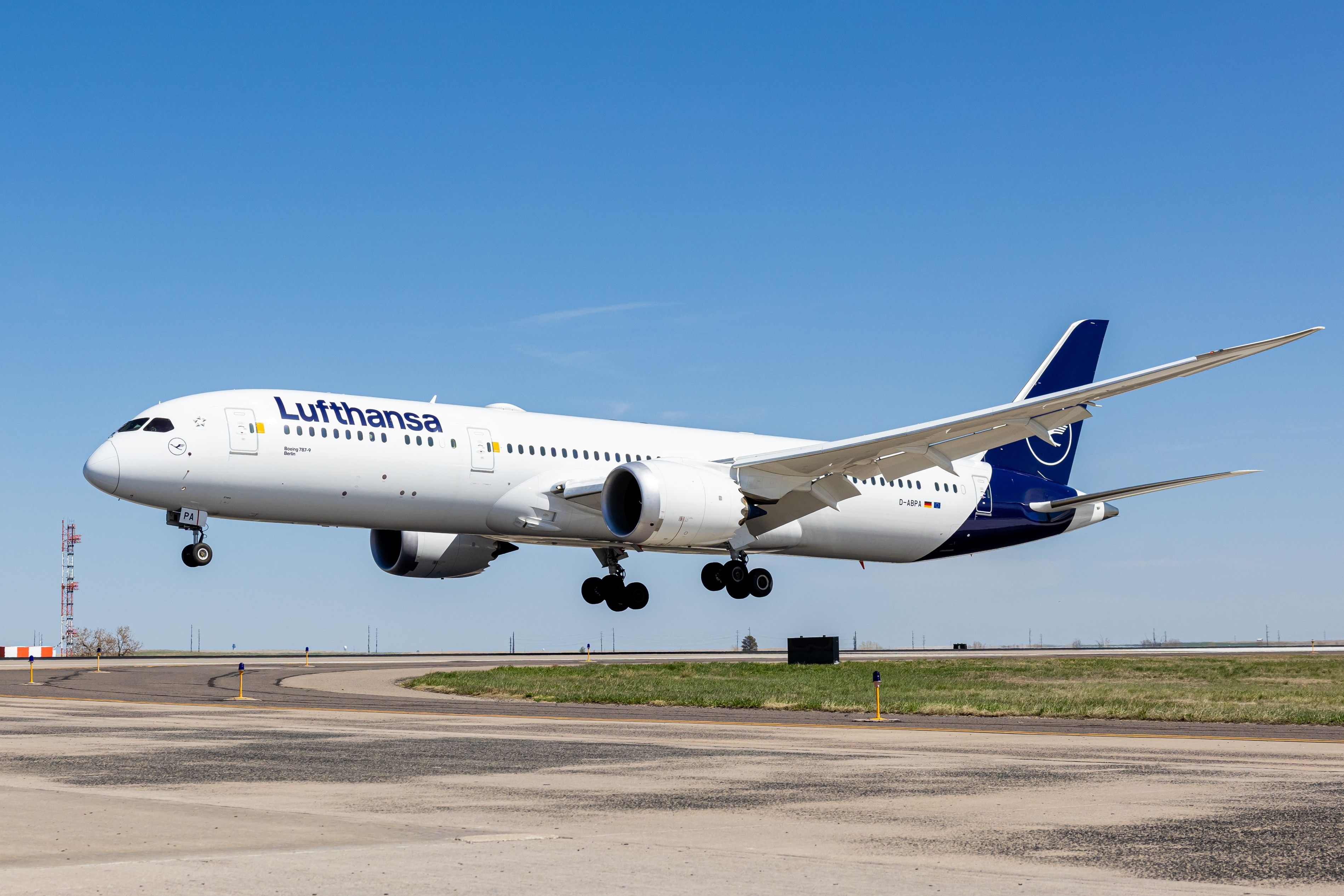
Lufthansa Group and the Portuguese government signed an agreement on 3 November for the German airline to take a 44.9% stake in TAP Air Portugal. The initial price is €1.025 billion, roughly $1.2 billion, funded entirely from existing liquidity, and the signing took place at Lisbon Airport.
The deal and its conditions
Portugal chose Lufthansa nearly three weeks before the signing, ahead of rival bidder Air France-KLM. The deal still needs European Commission approval, with completion not expected until 2028. Portugal will hold a majority for now, and the government has outlined potential growth in the fleet to 130 aircraft.
The holding could climb further. Euronews reports that Lufthansa could reach 49.9% by buying shares initially reserved for TAP employees, lifting total consideration to €1.2 billion. Future majority acquisition remains under consideration, and Lufthansa has welcomed the possibility of TAP's full privatisation.
Chief executive Carsten Spohr called the two networks complementary, particularly in South America and Brazil. Lisbon becomes the group's seventh hub, with further growth planned across Portuguese-speaking Africa and North America. Lufthansa expects up to €450 million in synergies, most potentially achievable before it holds a majority.
Spohr also addressed TAP's identity directly. "Together with TAP's employees, we want to continue the airline's success story, preserve its Portuguese identity, and develop Lisbon into a Lufthansa Group hub," he said. Lufthansa's commitments include keeping that identity, strengthening regional connectivity and expanding investment in Portugal.
Why Lufthansa won
The winning bid was not the obvious one. Air France-KLM looked the more complementary partner, with hubs at Paris and Amsterdam and no existing integration weighing on it, while Lufthansa was still absorbing ITA Airways. Lufthansa's existing Star Alliance tie with TAP also simplified commercial cooperation.
In the end the financial offer proved decisive. Portugal said Lufthansa's proposal was up to 16% higher than Air France-KLM's, and carried less uncertainty. Both bidders improved their proposals during the final negotiations and their strategic commitments became broadly comparable. Prime Minister Luís Montenegro called Lufthansa "the choice that best protected Portugal's national interests."
The two carriers are in different global alliances: TAP in Star Alliance, Air France-KLM in SkyTeam. For Lufthansa, TAP's Latin American presence filled a gap in its own network rather than extending one it already had, an argument the government appears to have weighed alongside the price.
Lufthansa brings its multi-brand record to the table. It already integrates SWISS, Austrian Airlines, Brussels Airlines and ITA Airways, allowing each carrier to hold its identity while sharing commercial and operational resources. That experience is one advantage, though TAP's structure differs sharply from those earlier acquisitions.
The 44.9% stake is a minority position, and that is the challenge. Lufthansa must deliver substantial synergies without the control it enjoyed in its previous takeovers. The investment is well above what the group paid before: more than three times the price of its 41% stake in ITA in 2025.
The extra premium points to Brazil. Lufthansa estimates its share of Europe to Latin America traffic at roughly 9%, rising to a calculated 20% once TAP is included. Lisbon's long-established connections to Brazil open markets where Lufthansa's own network is comparatively limited and let it compete with IAG and Air France-KLM.
The Iberia comparison
Iberia is the comparison Lufthansa hopes to repeat. After restructuring, and following the 2011 merger that created IAG, Iberia became one of Europe's most profitable airlines, recording a 16.2% operating margin and €1.31 billion in operating profit in 2025.
Iberia's Europe to Latin America and Caribbean capacity reached a record 5.5 million seats that year, showing the financial value of a strong transatlantic network. Lufthansa wants to recreate that through coordinated schedules, purchasing, distribution and stronger connecting traffic from Lisbon.
The parallel is imperfect. Iberia's turnaround happened under IAG's full ownership, while Lufthansa must start by working alongside the Portuguese government as a minority holder. TAP also faces profitability pressures, making the roughly €1 billion investment a substantial bet that the Brazilian network can deliver.
Lufthansa Technik's new facility near Porto is part of the plan, and should help push the group's Portuguese workforce above 1,000 by 2030. The government sees European Commission approval as the remaining hurdle, with 2028 the expected year of completion subject to that decision.
The signing is another step in Lufthansa's European airline consolidation strategy, moved past its earlier favourite position for Air France-KLM. With the offer accepted and the papers signed, the transaction now shifts to Brussels, where the competition authority will scrutinise a seventh Lufthansa hub.
What remains to be settled is how Lufthansa extracts synergies before it owns the majority it may one day seek. The test is whether a €1.03 billion minority stake can produce an Iberia-style transformation from Lisbon.
Support the content you love — it’s free 🎉
Add Worthbury as a preferred source on Google. Our stories will be more likely to appear in Google’s Top Stories. It’s free and supports our team. Thank you!
Add as preferred sourceYou can remove us any time in Google’s source preferences.
Thank you — you’re all set 🎉
Worthbury is now one of your preferred sources, so our briefings are more likely to appear in Google’s Top Stories.
This briefing is published daily using an AI-powered system crafted by Worthbury's team and finely tuned to meet our editorial standards. While we continuously test and review the output, mistakes can sometimes happen. Tell us if you spot one.
Images: Lufthansa; Credit: Denver International Airport