
Mulberry first-half revenue rises 18% to £63.7m as turnaround gains pace
The loss before tax widened to £33.4 million on a £27.6 million non-cash charge, even as the adjusted EBITDA loss shrank to £500,000.


Mulberry's first-half revenue rose 18% to £63.7 million in the six months to 26 September, driven by demand for new products, house icons and a return to the London Fashion Week runway. Gross margin improved to 70.2%, and growth came in every region.
Adjusted EBITDA loss narrowed to £500,000 from £4.6 million a year earlier. Mulberry, the British leather goods brand established in 1971, says retail and digital like-for-like revenue grew 15%, as chief executive Andrea Baldo's turnaround reaches its eighteenth month.
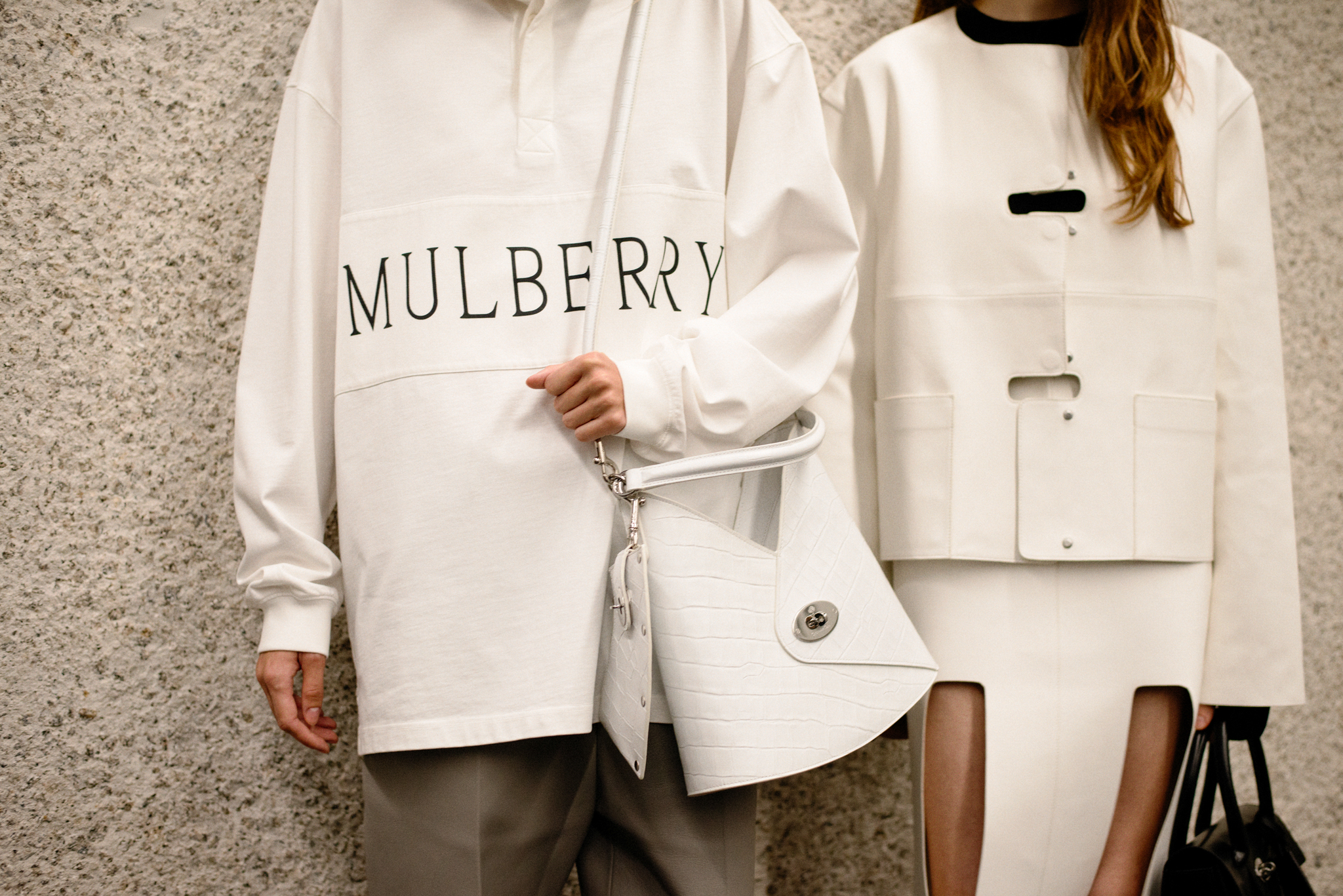
Much of the momentum came from a bag the company never planned for. The XL Delilah, an oversized slouchy shoulder bag in black soft cow leather or brown suede, retails at £1,595 and emerged as a bestseller far beyond initial expectations.
"We were caught off guard," Baldo said, citing both the price point and persistent demand for larger, softer, more functional bags. The company accelerated replenishment and expects the model back in stock before Christmas, using materials reserved for agile production.
Mulberry's own factories allow it to respond more quickly. Baldo describes the approach as "test and scale," arguing it is hard to predict in advance which products will become bestsellers. Delilah's success gives the brand a base on which to build.
The wider offer spans newer styles such as Stevie, Raffia, Crochet and the Darley Camera Bag, alongside core bags including Bayswater and Lily. Baldo said the results showed the "Back to the Mulberry Spirit" strategy was delivering after 18 months.
"We are delivering what we have promised," he said, pointing to revenue growth and lower operating losses. "Still a lot to do, but clearly the changes that we have implemented are delivering." The turnaround pairs fresh products with the brand's heritage.
The runway return with veteran designer Christopher Kane produced what Baldo called a "huge impact," lifting online searches and social engagement. The collaboration is meant to create a "halo" for the brand while the collection works alongside its core products.
Baldo said the Kane partnership will be judged on store traffic, conversion and like-for-like sales. He called the recent Rocker bag a promising start: it was Mulberry's best-performing bag in London during the week of a store takeover in Covent Garden.
Where the growth came from
Wholesale revenue rose 52% in the first half and took a 17% share of the business, up from 14% a year earlier. Retail and digital sales climbed 28% in the United States, 23% in Europe and 10% in the U.K.
U.S. digital revenue jumped 35%, supported by customer demand and the launch of Bloomingdale's Marketplace. New U.S. customers increased 22.9% year on year. The Nordics showed particularly strong wholesale growth.
Baldo, who was responsible for Ganni's early success, said Mulberry began building Nordic awareness more than a year ago, including an early collaboration during Copenhagen Fashion Week. He pointed to understated luxury, craftsmanship, heritage, value and a more playful approach.
Full-price performance signals the quality of that growth, Baldo said. Operating expenses rose 12% to £48 million, below the rate of revenue growth, as the company cited efficiencies alongside continued investment in marketing, brand and ready-to-wear.
The loss, and the charge, explained
Reported operating loss narrowed 41% to £2.9 million, and underlying loss before tax improved 24% to £5.8 million. Reported loss before tax, however, widened to £33.4 million from £7.1 million a year earlier.
The gap comes from a £27.6 million non-cash fair-value charge tied to the conversion feature of the company's convertible loan notes. Mulberry said the charge mainly reflected the rise in its share price and was not expected to affect cash later.
Chief financial officer Billy O'Connor said the company was in line with board expectations and "cautiously optimistic" about the festive trading period. The turnaround is "a marathon, not a sprint," he added, with the board "pleased" and focused on delivery.
For the second half, Mulberry plans to focus on full-price sales and disciplined trading rather than chasing volume through promotions. Its medium-term targets remain annual revenue above £200 million and a 15% adjusted EBIT margin.
"The golden quarter is important, but we are extremely focused on delivering long-term value for our shareholders," Baldo said. Over the mid to long term, Mulberry wants to build its Asian business by tailoring its approach to local customers.
Baldo recently visited Asia, assessing where future opportunities lie. "In a globalised world, you need to focus and localise your offer," he said, adding that Asia remained "on our radar" while the U.K. and responsive markets stay the priority.
Support the content you love — it’s free 🎉
Add Worthbury as a preferred source on Google. Our stories will be more likely to appear in Google’s Top Stories. It’s free and supports our team. Thank you!
Add as preferred sourceYou can remove us any time in Google’s source preferences.
Thank you — you’re all set 🎉
Worthbury is now one of your preferred sources, so our briefings are more likely to appear in Google’s Top Stories.
This briefing is published daily using an AI-powered system crafted by Worthbury's team and finely tuned to meet our editorial standards. While we continuously test and review the output, mistakes can sometimes happen. Tell us if you spot one.
Images: Mulberry