
White Mountaineering names C.P. Company's Alessandro Pungetti creative director
The Japanese label's parent, Rhino Inc., says the Italian designer brings textile expertise, and he plans artisanal garment dyeing tied to Japanese culture.


White Mountaineering has named veteran Italian menswear designer Alessandro Pungetti as its new creative director, succeeding founder Yosuke Aizawa. Pungetti takes on the role of head designer from the fall 2027 collection, which is the first he will present, in Paris next January. The brand announced the move in a statement.
Aizawa stepped down earlier this year after 20 years at the helm of the Japanese label. Pungetti brings long experience as head designer of C.P. Company and as cofounder of Ten C with Paul Harvey. He will continue juggling his existing design commitments alongside the new White Mountaineering role.
The brand and its parent company, Rhino Inc., framed the appointment as a bet on textile expertise. They credited Pungetti's command of processing techniques and his grasp of military, sports and workwear codes, arguing he could open new possibilities while protecting the core values underpinning White Mountaineering.
The company also lauded his "unwavering commitment to design, his curiosity about materials and manufacturing techniques, and his boundless passion." Pungetti, for his part, said he did not accept immediately. The brief differed from anything he had done before, he told WWD.
He said he spent a long time wondering how to bring his perspective to the line before deciding, in his words, in a very Italian way: "Why not?" The decision continues a career that has included a stint designing knitwear for Stone Island.
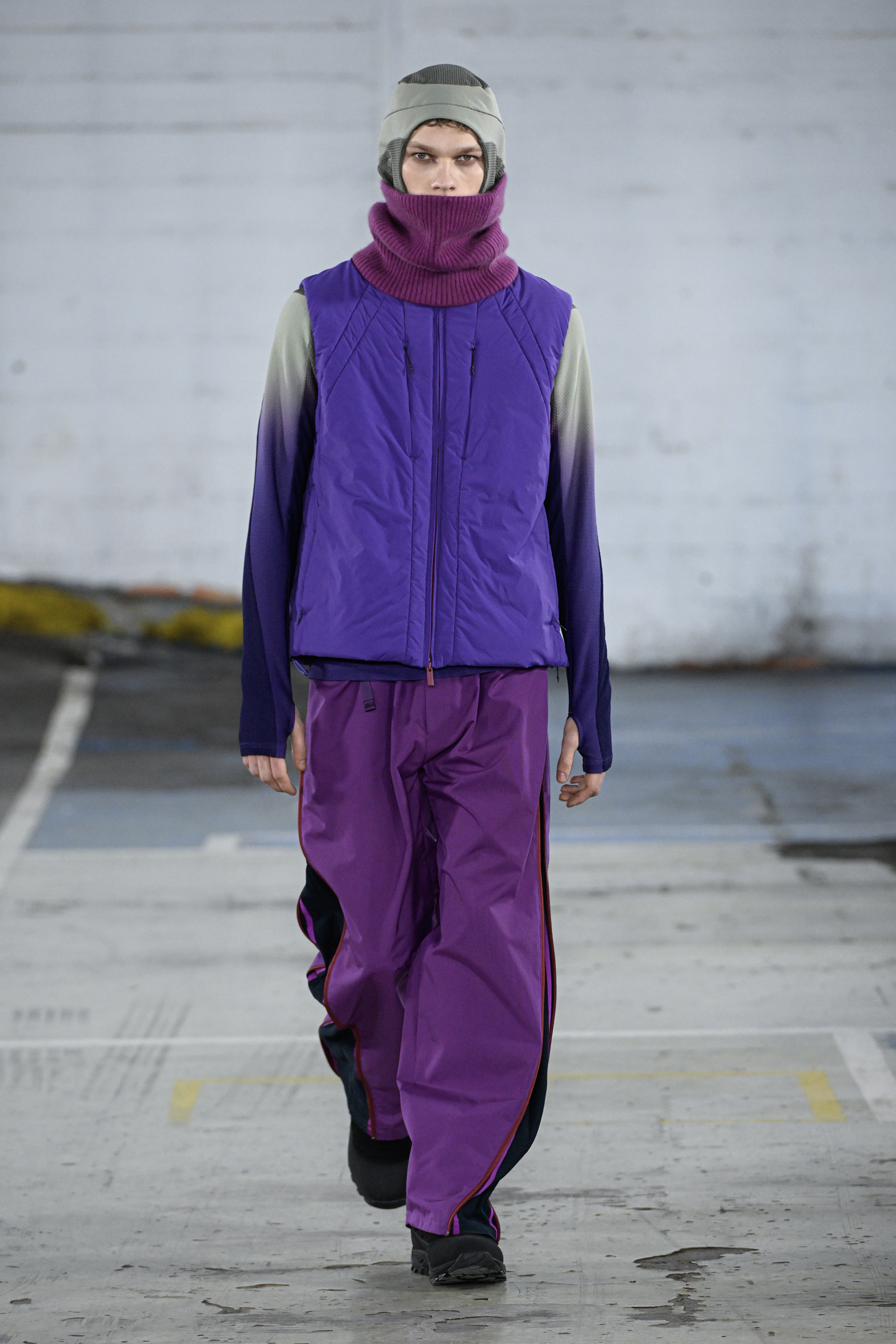
White Mountaineering was founded in Tokyo in 2006 by Aizawa, a former assistant to Junya Watanabe at Comme des Garçons. The label is known for fusing high-performance technical fabrics with avant-garde urban tailoring and has worked with Uniqlo, Adidas, Reebok, Timberland and Umbro.
Pungetti said he was intrigued by the way the house injected fashion and streetwear sensibility into functional outdoor gear. He has always been interested in bringing military and workwear influences into sportswear. Outdoor apparel, he said, had long been a clean technical sphere with few lines.
He described the geometry of traditional outdoor design as, no offence meant, a little boring and repetitive. He called the label's approach revolutionary, saying it completely broke the mould of how outdoor apparel was perceived and brought a fresh perspective that upended those conventions.
Pungetti plans to carry some of his signatures into the house, starting with a presentation at the next edition of Paris Men's Fashion Week. Garment dyeing will clearly feature, he said, with techniques tied closely to Japanese culture and more artisanal than industrial.
He also intends to reinterpret iconic imagery of the mountains. Military references will return too, he said, but in a context closer to outdoor wear. Pungetti has long been curious about Japanese culture, and his brother holds a sixth dan in kendo.
Early in his career, he said, he was profoundly marked by seeing a Comme des Garçons menswear collection in Paris, and he credits Japanese designers with introducing then-novelties such as black denim.
He acknowledged the strain of working at a distance, saying he will travel regularly to Tokyo. The fusion of an Italian perspective with a Japanese brand is incredibly appealing, he said, but he does not pretend it will be easy. He does not view it as a reckless adventure.
Pungetti intends to work as a united team to make the challenge succeed. He argued that a strong design signature is what lets a label stand out in a market he said is undoubtedly experiencing fatigue, pointing to challenges facing wholesale and to propositions that are less compelling.
Why he says the market is tough
Consumers, he said, face real spending constraints while players in accessible fashion compete aggressively with very strong offers at highly competitive prices. That, he said, is clearly putting pressure on the market. His answer, at White Mountaineering as elsewhere, is a point of differentiation.
"You have to be yourself," he said. The appointment hands a label built on technical outerwear to a designer whose C.P. Company background puts functional fabrics at the centre of his practice, close to White Mountaineering's own origins in high-performance materials.
Aizawa's exit closes two decades of leadership in which the founder built the label into a collaborator of global sportswear names. His successor inherits that history while keeping his own commitments at C.P. Company and Ten C intact.
Support the content you love — it’s free 🎉
Add Worthbury as a preferred source on Google. Our stories will be more likely to appear in Google’s Top Stories. It’s free and supports our team. Thank you!
Add as preferred sourceYou can remove us any time in Google’s source preferences.
Thank you — you’re all set 🎉
Worthbury is now one of your preferred sources, so our briefings are more likely to appear in Google’s Top Stories.
Sources
This briefing is published daily using an AI-powered system crafted by Worthbury's team and finely tuned to meet our editorial standards. While we continuously test and review the output, mistakes can sometimes happen. Tell us if you spot one.
Images: Alessandro Pungetti Courtesy of White Mountaineering; Courtesy of White Mountaineering