

Aston Martin delays its first EV to between 2033 and 2035, keeping V-12 alive
Chief executive Adrian Hallmark says the company will keep its V-8 and V-12 engines until the later date.


Aston Martin's first battery-electric car will not arrive before 2033, and chief executive Adrian Hallmark will not commit to a firm date within the window that follows. He puts the debut somewhere between 2033 and 2035, a span he says legislation rather than enthusiasm will decide.
"We only need BEVs to be compliant for legislative reasons [in certain markets] just before 2035," Hallmark told Autocar, the publication that first reported the shift. "I'm not going to give an absolute date, because it's imprecise. It could be 2035, it might be 2033," he added. "It's not 2031."
The British marque has now walked its first EV back three times. At the start of the decade it aimed for a 2025 launch, then pushed that to 2026, and previous management spoke of 2027 before Hallmark himself suggested 2030. That trailed timeline has now moved a further three years out.
Aston Martin is a British luxury manufacturer founded in 1913, best known for high-performance sports cars and grand tourers. Its customers, Hallmark has said, have not hidden their feelings. Executive chairman Lawrence Stroll admitted in 2024 that electric demand "is not what we thought it was going to be."
Hallmark now characterises the company's stance with a phrase of his own making. "We are not BEV deniers but BEV delayers," he said. The distinction matters because regulation in the EU and the UK will require every new vehicle sold in 2035 to be zero-emission, whatever buyers prefer.
That regulatory deadline is the whole strategy. The company will run its combustion engines right up against it. "We have a road map to keep the bigger and smaller engines alive and compliant all the way through to the end of that period," Hallmark said, meaning the V-8 and the V-12.
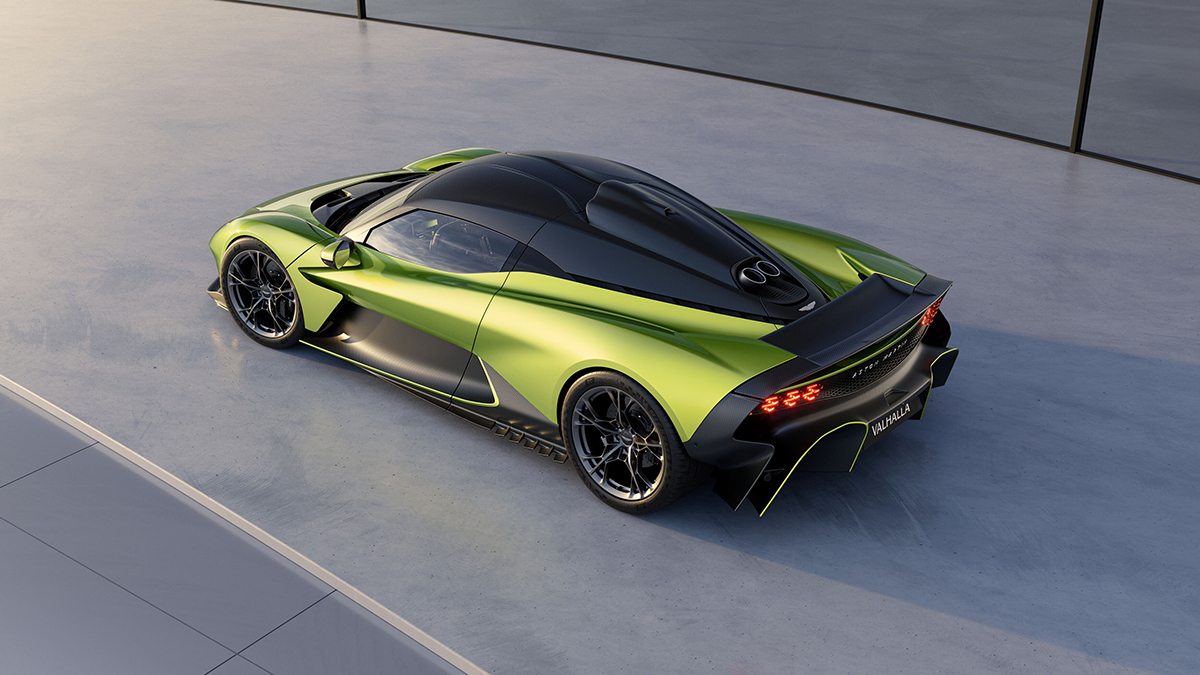
The road map already has a tangible face. The Valhalla supercar pairs a Mercedes-AMG-sourced V-8 with a trio of electric motors, showing how the marque intends to meet tightening rules without retiring its most recognisable hardware. Hallmark is open to more hybrids in the range.
He draws a line at plug-in hybrid technology, which he opposes because of the weight the larger batteries add. The objection is a design one as much as a technical one, and it fits a company that sells on handling and feel above all else.
Where the EV itself eventually comes from is already arranged. Aston Martin signed an agreement with Lucid in 2023 giving it access to the American firm's electric technology, and it holds a separate partnership with Mercedes-Benz, its current engine supplier, for powertrains and electrical systems.
Legislation is the reason Hallmark gives for both the delay and the hesitation that surrounds it. The rules, he said, are "changing way faster than any car company can cope with," a complaint echoed across an industry where governments have softened several once-firm electrification pledges.
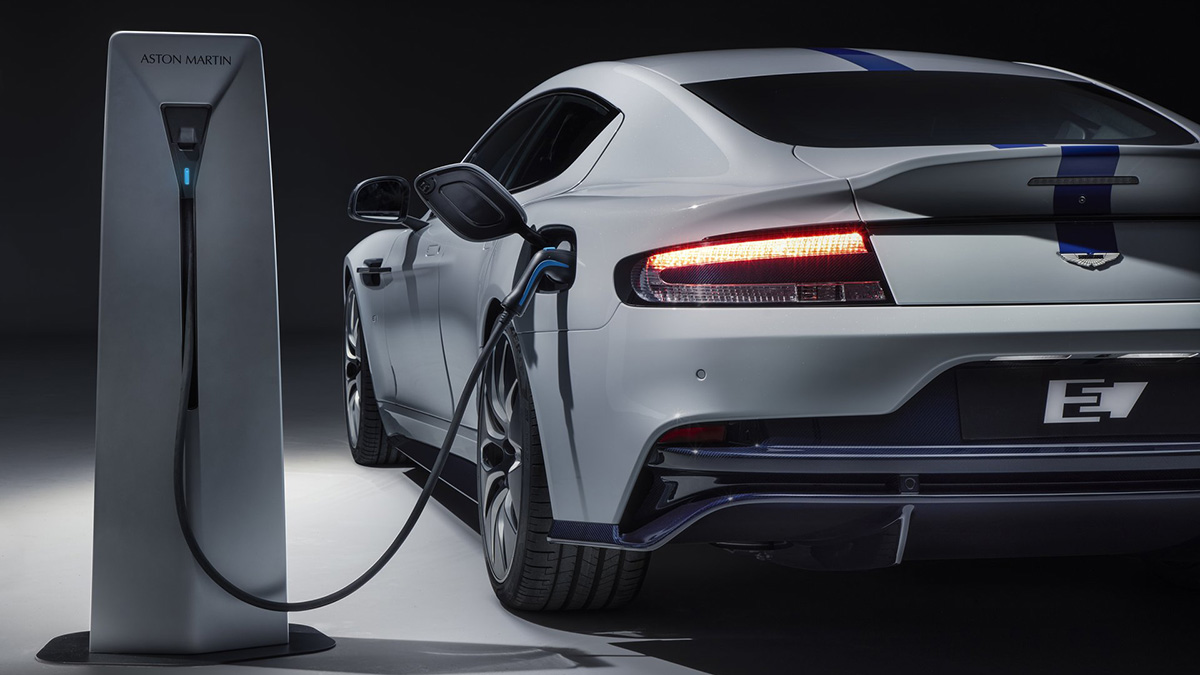
Aston Martin is not alone in retreating, but it is among the most prominent. Other legacy makers have quietly rolled back ambitious targets set earlier this decade, and demand for high-end electric cars at the top of the market has stayed thin, Hallmark's own customers apparently first among them.
Since 2024 the marque has said plainly that its traditional buyers show little appetite for a car without a snarling combustion engine. That customer verdict, delivered first by Stroll and now repeated by Hallmark, is the commercial half of the same argument the legislation supplies.
What the timeline leaves open
Hallmark's refusal to name a date is deliberate. The three-year band he quotes is a hedge against political volatility he cannot forecast, and it also keeps the company's options open on which suppliers and which technologies carry the first EV when it does arrive.
What is fixed is the endpoint. Hallmark is open to more hybridization in the lineup, but he is against plug-ins because of the weight penalties they add. That is the clearest signal yet that the marque will run its combustion range to the final hour the law permits.
We have long tracked Aston Martin as a company whose value rests on engine character and driver engagement rather than on electrification speed. A marque founded in 1913 and built on grand tourers can afford to bring up the rear of the EV transition, and its executives are now saying as much out loud.
The previous management's 2027 target was itself already a retreat from a 2025 promise, and our coverage noted each step as the dates slid. This latest move is the biggest single jump yet, a full three years past Hallmark's own last estimate, and it converts a delay into an official policy.
The next marker is not a launch but a question of compliance. As 2035 approaches, Aston Martin will have to prove its V-8 and V-12 road map actually keeps both engines legal in Europe and the UK, the two markets whose rules frame Hallmark's entire schedule.
Support the content you love — it’s free 🎉
Add Worthbury as a preferred source on Google. Our stories will be more likely to appear in Google’s Top Stories. It’s free and supports our team. Thank you!
Add as preferred sourceYou can remove us any time in Google’s source preferences.
Thank you — you’re all set 🎉
Worthbury is now one of your preferred sources, so our briefings are more likely to appear in Google’s Top Stories.
This briefing is published daily using an AI-powered system crafted by Worthbury's team and finely tuned to meet our editorial standards. While we continuously test and review the output, mistakes can sometimes happen. Tell us if you spot one.
Images: Aston Martin; The Aston Martin Valhalla is powered by a V-8 paired with a trio of electric motors