

Chanel sells majority stake in beauty manufacturer Capsum to Motion Equity
Capsum's sales are close to €80 million today, and Bardon wants to quintuple them within five years through acquisitions.


Chanel has sold its majority stake in Capsum, the French beauty contract manufacturer it first backed in 2008. Motion Equity Partners, a mid-market private equity firm, takes control. Founding chief executive Sébastien Bardon and his management team retain a minority share, as does Chanel itself.
Financial terms were not disclosed. Bardon framed the change as continuity rather than rupture. "We're opening the third chapter of Capsum's adventure," he said, describing the first chapter as the company's founding in 2008, best known then for its proprietary microfluidics technology.
Microfluidics encapsulates active ingredients to create textures that are visually distinctive and highly sensorial. That early phase saw Bardon's team navigating prototypes and holding discussions with potential clients to work out what the young company could bring to the beauty industry.
The second chapter, under Chanel's majority ownership, lasted the next 11 years. The French luxury house, the maison founded by Coco Chanel in 1910, was Capsum's first client and remains its top client. "They are a fantastic partner for innovation," Bardon said.
In that period Capsum broadened into a multitechnology CDMO, a Contract Development and Manufacturing Organization. It now develops and makes both microfluidic products, which account for almost 40 percent of its US business, and non-microfluidic lines such as skincare and makeup.
Its client list spans luxury and prestige names: Elizabeth Arden, Galénic, La Prairie, L'Occitane and Meaningful Beauty among them. More than half of the company's US business is now built on emulsions and advanced emulsion-enabled technologies, a shift Bardon traces to the past five years.
The third chapter is expansion, aimed at Europe and, more so, Asia and the United States. Bardon said he and Chanel decided external growth and acquisitions had to be central to strategy for the next five to ten years, which is why they sought a partner who understands deals.
Motion Equity Partners, a French firm of human size with a record across industries, fit the brief. "They like factories, not all private equity likes factories, and that's important to us," Bardon said, praising its record of helping portfolio companies buy abroad.
Acquisitions are now the stated engine. Capsum aims to quintuple its revenue within five years and rank among the top five CDMOs in beauty worldwide. Bardon notes the company multiplied sales 17-fold over the past decade purely through organic growth; external growth is meant to complement it.
Annual sales today stand at close to €80 million, with roughly a third coming from the United States. Two-thirds of revenue is skincare and a third makeup, and its growth significantly outperforms the broader CDMO cosmetics market. The group reinvests more than 10 percent of sales in research and development.
Capsum opened a manufacturing facility in Austin, Texas, in 2020, and more recently acquired KKT Labs, adding local formulation, local leadership and a network of US-based brands. "We are planning 50 percent growth in the U.S. next year," Bardon said.
An R&D operation in Austin is slated to open in mid-November. The second lever is fragrance, which Capsum will enter next year: water-based fragrance and what Bardon calls innovative ancillaries such as scented body products and hair mists. He said the field offers the group enormous scope.
Asia is the third lever, to be built quickly through acquisition so the company can serve local brands. "Since most of the packaging is made in China, it makes sense to operate directly there," Bardon said. He argued Asia is becoming a major innovation hub and Capsum wants to be part of it directly.
What comes next for Capsum
Bardon wants the company able to serve every client from whichever continent they choose, as brands begin to talk about local sourcing. Looking further ahead, Capsum hopes to move into nutraceuticals and other supplements, with targeted acquisitions to round out a technology portfolio that began as a microfluidics pioneer.
Capsum employs 270 people, a third of them in research and development, with R&D and manufacturing in Marseille, France, and manufacturing in Austin. Bardon called the reinvestment of more than a tenth of sales in R&D "what makes Capsum unique." He also called 2026 his team's year of the "cheval fougueux", a fiery steed.
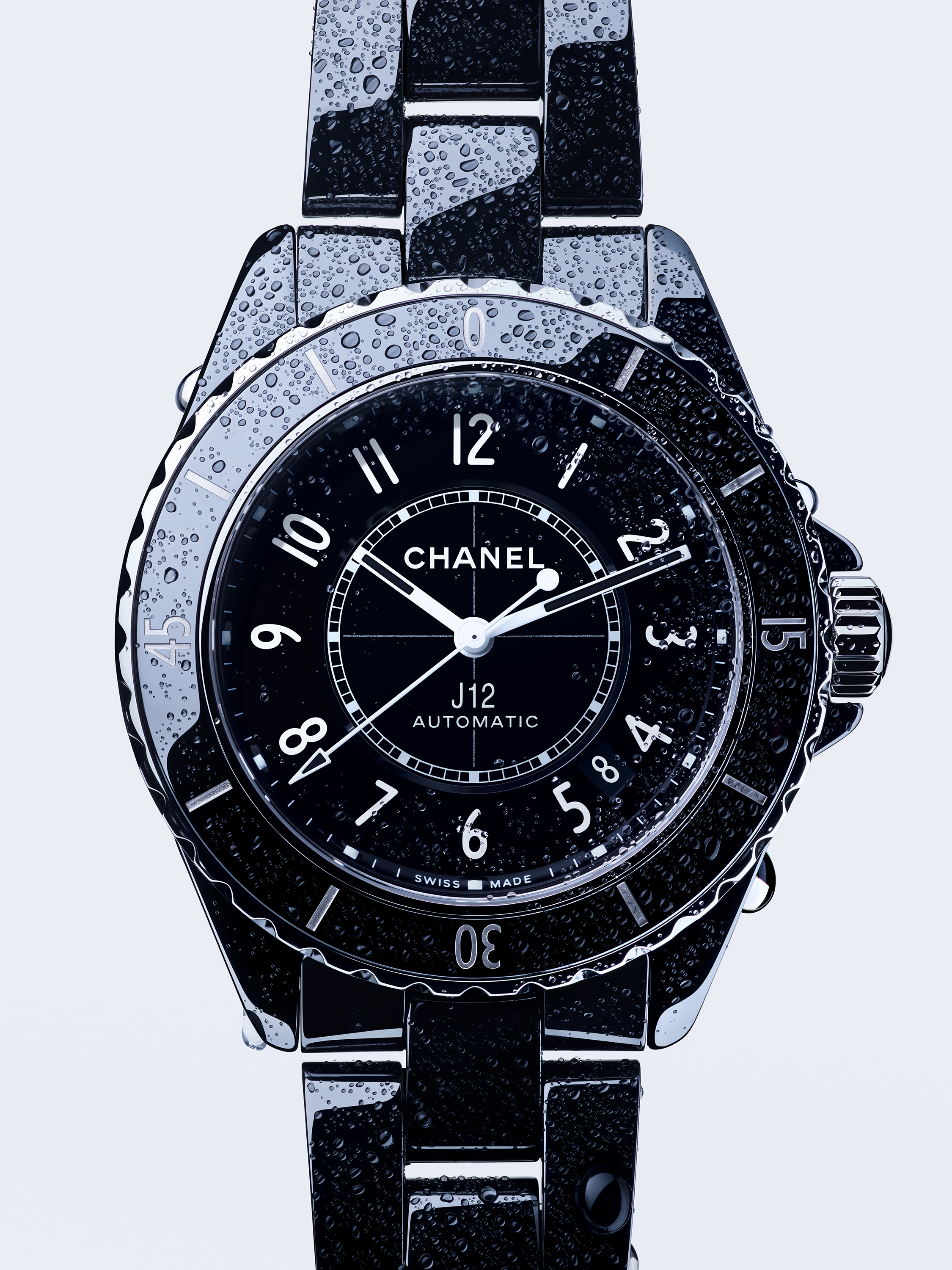
Chanel's own recent steps have ranged widely: we covered its acquisition, alongside F.P.Journe, of 95 percent of watchmaker Ebel for $66.5 million, and its first Wuhan store hoarding at SKP. The Capsum sale is a different direction, a retreat from a majority manufacturing position.
For a house the Wertheimer family owns outright, the divestment is a deliberate portfolio choice. Chanel keeps Capsum as its top client and as a minority shareholder in its former manufacturer, trading control for a partner Bardon expects to help fund the next phase of growth.
Support the content you love — it’s free 🎉
Add Worthbury as a preferred source on Google. Our stories will be more likely to appear in Google’s Top Stories. It’s free and supports our team. Thank you!
Add as preferred sourceYou can remove us any time in Google’s source preferences.
Thank you — you’re all set 🎉
Worthbury is now one of your preferred sources, so our briefings are more likely to appear in Google’s Top Stories.
Sources
This briefing is published daily using an AI-powered system crafted by Worthbury's team and finely tuned to meet our editorial standards. While we continuously test and review the output, mistakes can sometimes happen. Tell us if you spot one.
Images: Capsum has been acquired by Motion Equity Partners Courtesy of Capsum; Chanel