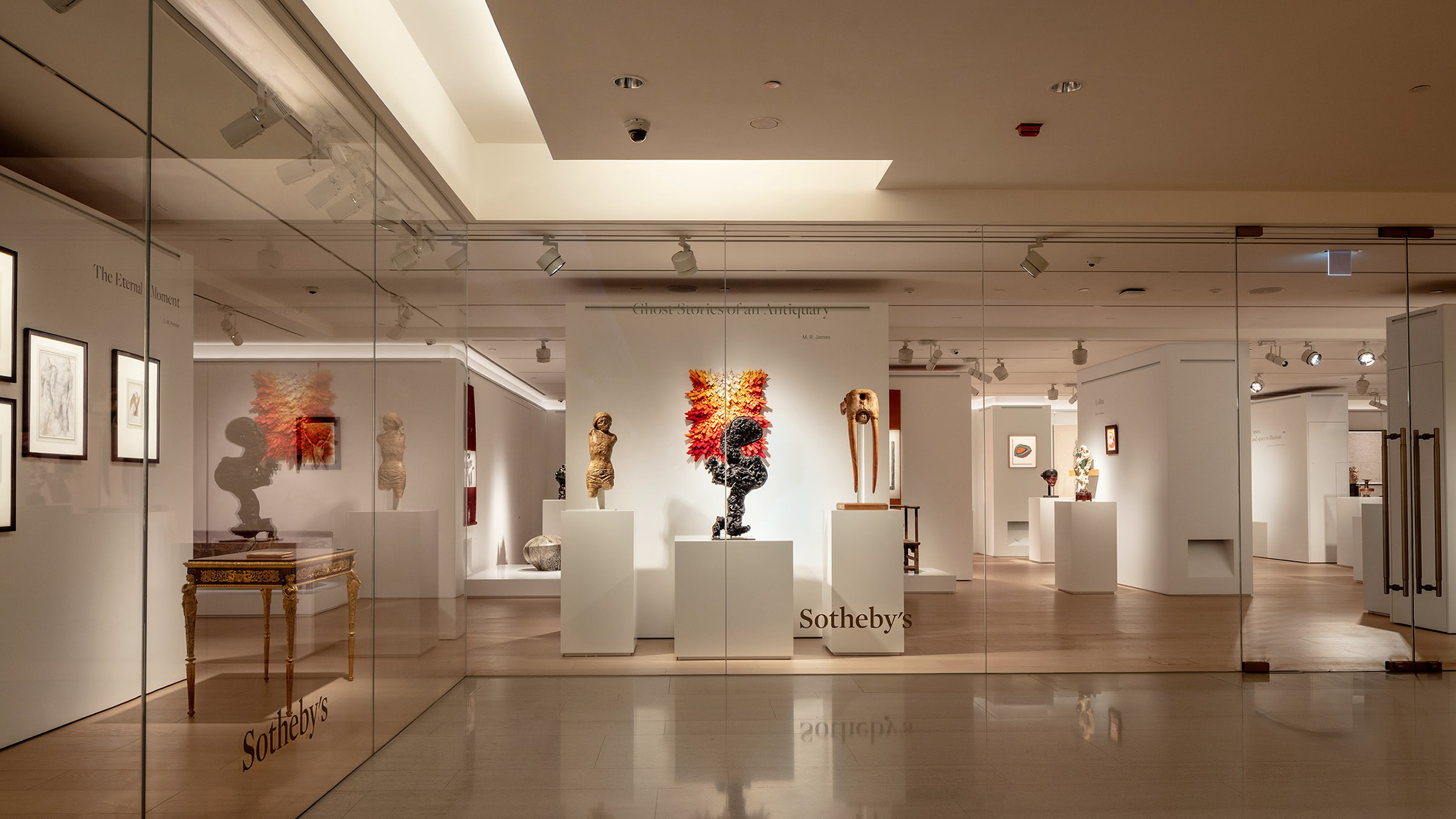

Gucci opens first Demna-era store concept on Avenue Montaigne
Redesigned London, Shanghai and Chengdu locations are set to follow by yearend as part of a 30 percent network trim by 2030.


Gucci has opened its first boutique in the new store concept from creative director Demna, at number 56 on Avenue Montaigne in Paris. The four-floor unit spans almost 16,000 square feet and replaces the house's previous location two doors down, barely a month after the same design served as the set for Demna's spring 2027 show in Milan.
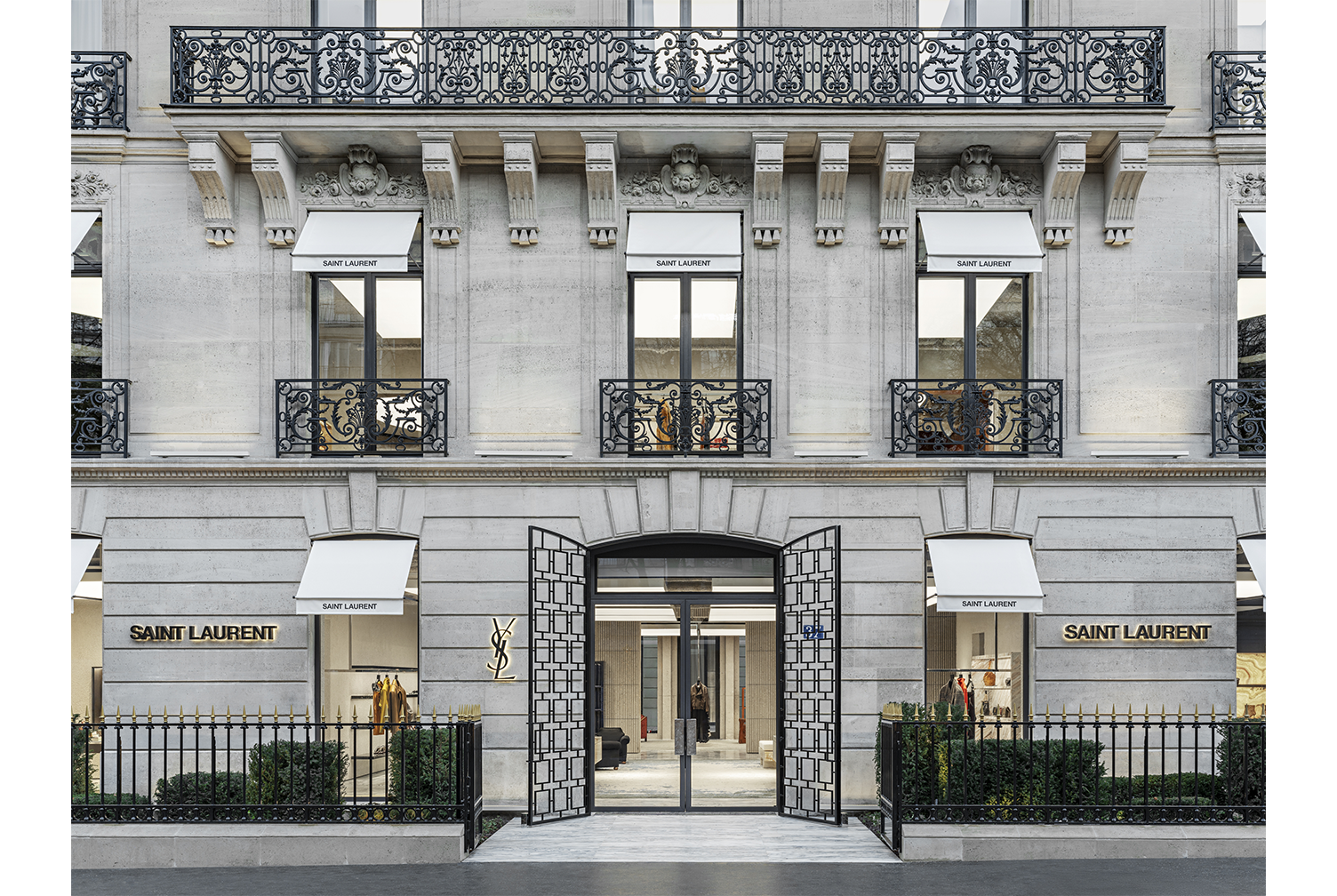
The opening marks the beginning of a global rollout, with redesigned stores set to be completed in London, Shanghai and Chengdu by the end of the year. Every future opening or relocation will feature the concept, and the brand has already refreshed its Milan and New York boutiques as it prepares to relocate them.
Francesca Bellettini, Gucci's president and chief executive officer since September 2025, had to translate Demna's new vision in record time. The designer's first full collection reached stores at the start of this year. Kering, Gucci's parent, had bought the building in 2023 before moving it into a joint venture with Ardian.
That venture gave the private equity firm a majority stake in a portfolio of prime real estate including the Avenue Montaigne site. Bellettini said the opportunity made the timing urgent. "We were very confident in what we were doing, and given that we had the real estate opportunity to relocate the store, we didn't want to miss the chance."
She called opening the first instance of a new concept on such a prominent street a bold move. Paris remains central to Gucci's plans: the company is building a mega-flagship near Place Vendôme it hopes to open at the end of next year. Avenue Montaigne, she said, draws both local shoppers and destination customers.
A store built to outlast any designer
The concept was developed jointly by Demna, Bellettini and Gucci's retail teams, drawing on the layout of an Italian Renaissance palazzo, Milanese architectural references and a client journey organised around discovery. Bellettini said the priority was a design that embodies the brand's DNA rather than the signature of one creative director.
That is a deliberate break with previous concepts, which gave stores little room to evolve and left much of the network looking dated. Gucci, founded in Florence in 1921, has cycled through several creative directors in three years. Bellettini described the house above all as a luxury brand with strong Italianità, warmth and radiance.
The early twentieth-century building reunites two former boutiques, once separated by a porch, and a private apartment that is now the second-floor Gucci Appartamento, a salon for private appointments. The entrance corridor ends in a bas-relief based on Gucci's riding aesthetic, echoed in other stores with a theme adapted to each city.
The interiors move between 1930s monumentality, with Ceppo di Gré wall cladding recalling Piero Portaluppi, and Renaissance opulence in marble, green stone and bronzite. Metals and wood evoke Milanese homes of the 1950s through 1970s. Bellettini said the materials and natural light are meant to show Demna's collections in a flattering way.
"Product is the hero, so the architecture should not overshadow the product," she said. The front rooms hold handbags and luggage, while ready-to-wear, silk, eyewear and fragrance are at the rear. Museum-style cases pair past and present icons, such as a ladylike top-handle Bamboo bag beside a roomy suede Bamboo tote.
Jewellery and at-home hospitality
The lower ground floor is given to men's collections with rough wall cladding and a stone-effect ceiling, while a travertine staircase with soft edges leads up. Bellettini said conveying a sense of sensuality mattered throughout. The first-floor women's room centres on a sculptural, 20-foot curved display unit informally known as the Library.
At the opening, one side of that unit carried clothing and the other the newly launched Horsebit Duomo bag. A neighbouring room is devoted to jewellery, a growing focus for Kering, which plans to detail its strategy for the segment at a Kering Jewelry Day in Paris on 2 December. A new round unit presents the Bamboo watch.
High jewellery is shown by appointment on the upper floor. At the front of the building, a women's ready-to-wear room clad in red travertine and red-pigmented concrete is beside a shoes room in dark walnut, handmade brown ceramic tiles and an iron-oxide-effect ceiling. Bellettini wants clients to feel at ease, as if at home.
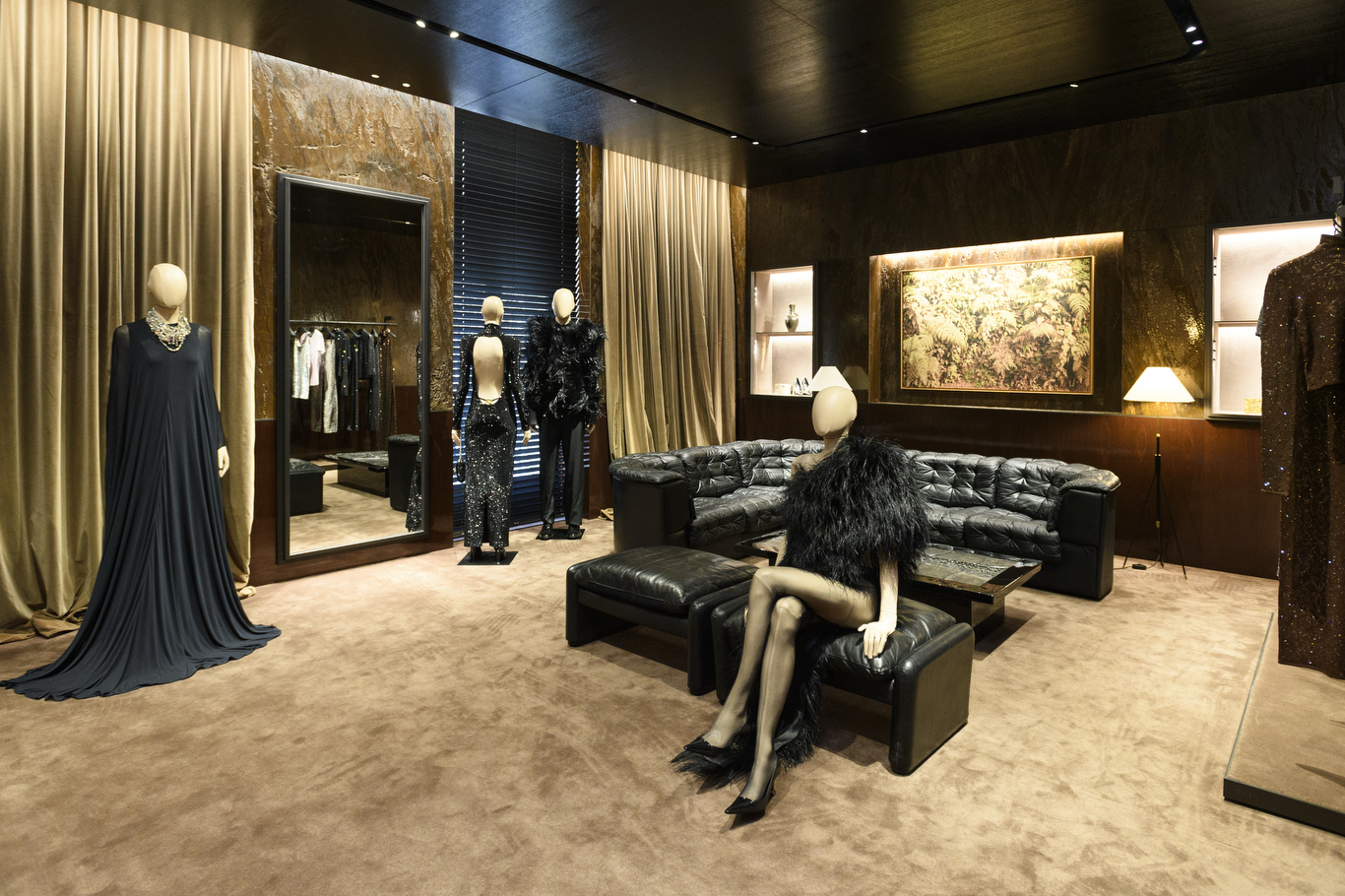
The second floor leans further into hospitality, with vintage furniture, green stone, darkened zebrano, waxed bronzite and velvet curtains. Designed as a penthouse, it can be split into three salons by movable walls and used for dinners or private appointments. Guests there see evening gowns and a new Flora-print tableware line developed with Ginori 1735.
The layout is curated and carries no price tags, with uniformed staff pulling additional pieces from stockrooms on every floor. Bellettini expects the Avenue Montaigne store to rank among Gucci's highest revenue earners worldwide, alongside its flagships in New York, Shanghai and Milan. She believes in presenting a lifestyle rather than a single category per room.
The rollout comes amid a wider reset. Kering chief executive Luca de Meo has ordered hundreds of underperforming stores closed, putting the emphasis on larger flagships in key cities. Gucci plans to trim its store network by 30 percent by 2030, although total square metres fall by only 25 percent, meaning some new locations will be bigger.
France accounted for 6 percent of Kering's revenues in 2025, and Gucci remains the group's main growth engine; our portfolio guide puts Gucci at roughly 41 percent of group revenue. When we covered Kering's third quarter, Gucci sales had slipped 6 percent, so the flagship push arrives against a backdrop the company is working to reverse.
Kering has already shuttered 105 units in the first nine months of this year, including 25 Gucci buildings, putting it ahead of target. Bellettini said the design's endurance controls cost and guarantees flexibility. "Now we need to roll up our sleeves and move as fast as possible, balancing cost and time, to restyle most of our store network," she said.
Support the content you love — it’s free 🎉
Add Worthbury as a preferred source on Google. Our stories will be more likely to appear in Google’s Top Stories. It’s free and supports our team. Thank you!
Add as preferred sourceYou can remove us any time in Google’s source preferences.
Thank you — you’re all set 🎉
Worthbury is now one of your preferred sources, so our briefings are more likely to appear in Google’s Top Stories.
This briefing is published daily using an AI-powered system crafted by Worthbury's team and finely tuned to meet our editorial standards. While we continuously test and review the output, mistakes can sometimes happen. Tell us if you spot one.
Images: Gucci