Gucci splits collections into four business units, hires two veterans
Leather goods, women's and men's ready-to-wear and shoes each get a dedicated lead reporting to chief product officer Marcello Costa.


Gucci is installing a new business unit structure that separates its runway lineups from its core, wardrobing collections, according to an internal memo. The house has hired industry veterans Monica Ulmi and Marco Semeghini as senior advisers to steer the execution of the reorganisation.
Both advisers are based in Italy, between Milan and Florence, and work alongside artistic director Demna and president and chief executive officer Francesca Bellettini. The memo describes two distinct flows for developing the fashion collections, designed to bring more focus, clearer responsibilities and stronger collaboration.
The advisers are not newcomers to the house. Ulmi began at Gucci in 1996 as leather goods merchandising director, a role she held until 2004, then became merchandising director, a position she kept until 2008. She moved to Salvatore Ferragamo from 2009 to 2010.
Ulmi was then at Versace from 2010 to 2018. Since then she has worked as an independent merchandising adviser, which makes her return a step back into a house where she spent twelve years across two senior merchandising roles.
Semeghini started his career in 1991 at Rinascente, Italy's main department store. He joined Gucci in 1996 and spent nine years in buying and merchandising roles of growing seniority. He then led merchandising, product and product development worldwide at Tom Ford from 2005 to 2010, before moving to Canali as director of product and product development from 2010 to 2014.
From 2010 to 2014 Semeghini was director of product and product development at Canali. Since then he has consulted and taught fashion business and luxury marketing, including at Istituto Marangoni and NYU in Florence.
Four categories, four leads
The business units are organised by category: leather goods, women's ready-to-wear, men's ready-to-wear and shoes. Each has a dedicated lead who reports to Marcello Costa, appointed chief product officer. Gucci, founded in Florence in 1921, thus ties each product line to a named owner.
Costa joined Gucci in February 2025 with more than two decades of experience at fashion houses including Bottega Veneta, Miu Miu and Stella McCartney. He was promoted to chief merchandising officer in May 2025, before the chief product officer title arrived.
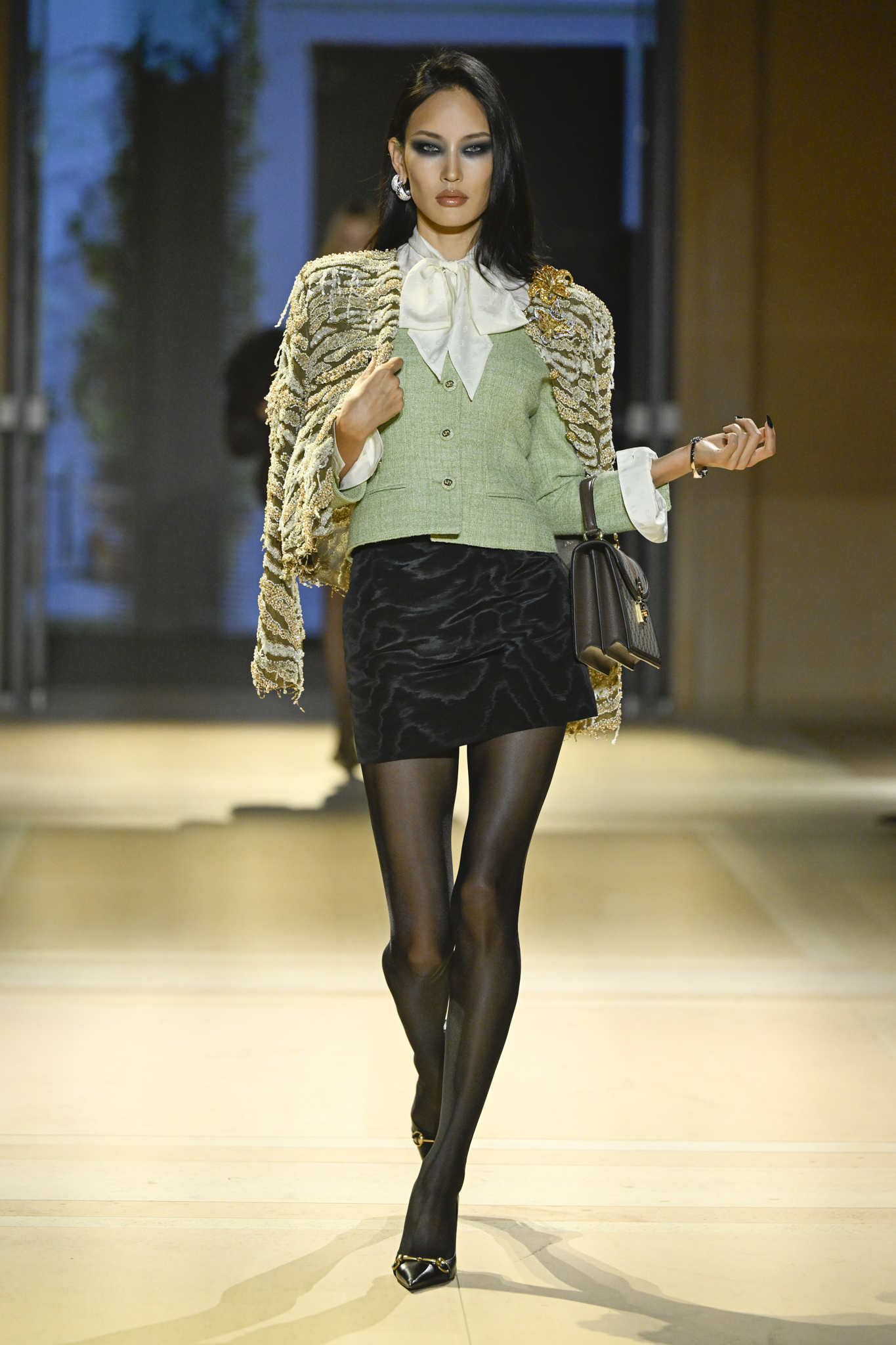
Each unit combines merchandising, collection coordination and core collection design, working closely with product development. The memo says this will deliver greater focus, clearer ownership and stronger accountability, helping the company make better and faster decisions.
Fashion and core collections are developed in parallel, with separate calendars, plans and decision-making processes. Each has a dedicated design team, both stemming from Demna's vision. The memo stresses that the house's design, development and execution remain rooted in Italy.
Every business unit is accountable for end-to-end execution of its category, from the core plan to calendar and development. That covers icons, wardrobe pieces, drops and made-to-order client requests adapted from the shows, all while protecting creativity, product excellence and clients.
The reset this serves
The reorganisation arrives while Gucci is mid-reset. When we covered Kering's third quarter, Gucci sales fell 6% at constant exchange rates and missed forecasts, while jewellery grew 11%. The flagship brand's recovery remained the group's defining priority.
In our Kering portfolio guide we noted that Gucci drives roughly 41% of group revenue, so its reset pulls the whole group up or down more than any rival conglomerate's single brand. The new structure is an operational lever in that rebuild.
We also reported the first Demna-era store concept on Avenue Montaigne, and retailers' top picks from Milan's spring 2027 shows included Gucci alongside Prada. The structure now puts product accountability behind that creative and commercial attention.
The memo sets out no targets or timetable, and no financial figures accompany it. Gucci has not said how the separate calendars will affect the cadence of drops or show schedules, nor whether more senior appointments will follow.
Support the content you love — it’s free 🎉
Add Worthbury as a preferred source on Google. Our stories will be more likely to appear in Google’s Top Stories. It’s free and supports our team. Thank you!
Add as preferred sourceYou can remove us any time in Google’s source preferences.
Thank you — you’re all set 🎉
Worthbury is now one of your preferred sources, so our briefings are more likely to appear in Google’s Top Stories.
This briefing is published daily using an AI-powered system crafted by Worthbury's team and finely tuned to meet our editorial standards. While we continuously test and review the output, mistakes can sometimes happen. Tell us if you spot one.
Images: Gucci