Icicle names Sabato De Sarno creative director, five months after Kering investment
Bénédicte Laloux stays on as women's design director working under him, while Icicle stays quiet on menswear's Mark van Beek.


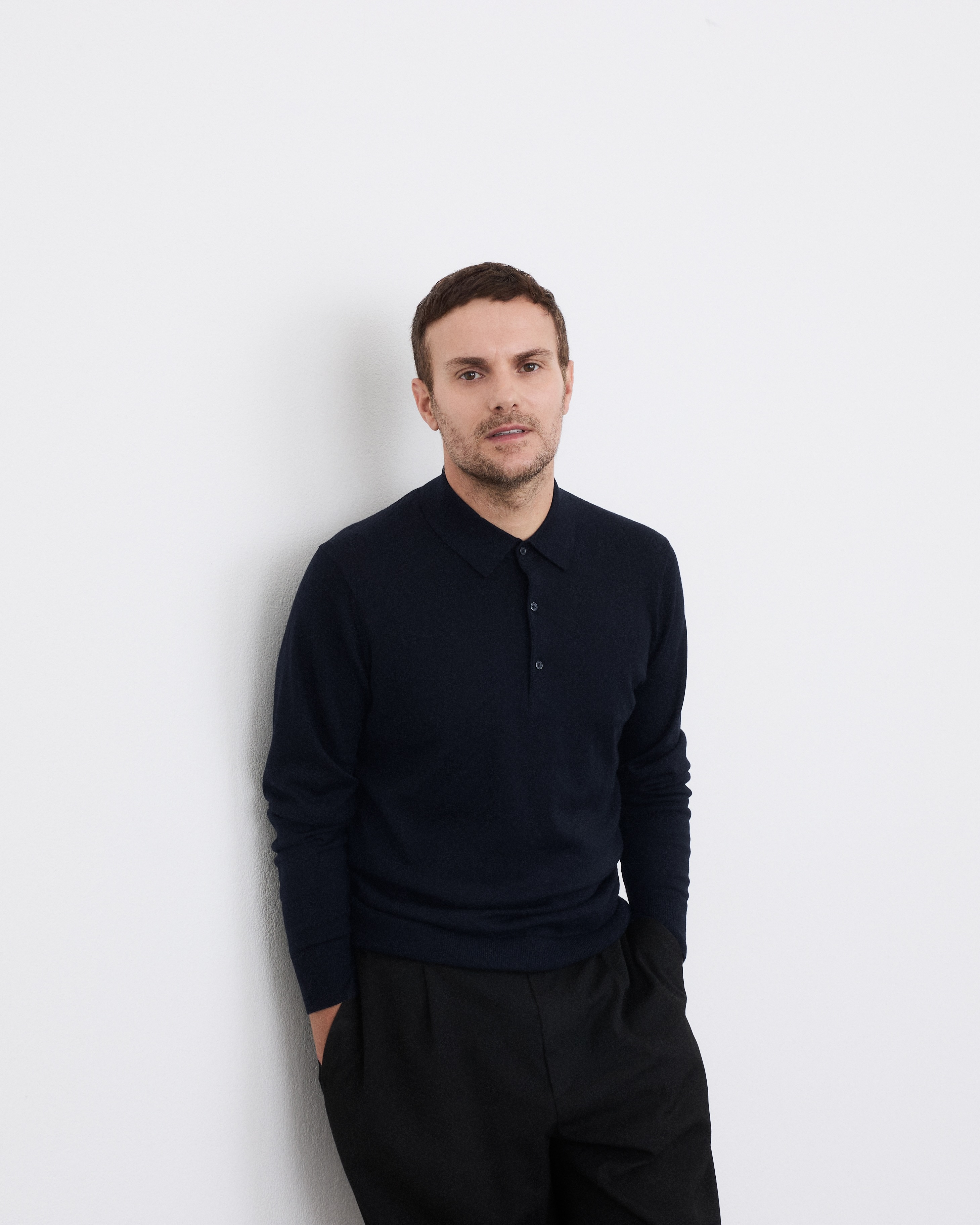
Icicle has appointed Sabato De Sarno as creative director, the Chinese fashion brand said on Monday, five months after Kering took a minority stake in the label. The Italian designer will oversee women's and men's ready-to-wear, accessories and eyewear, and will present his first collection for Icicle for the fall 2027 season.
Bénédicte Laloux, who joined Icicle's Paris design studio in 2013 and has been artistic director of womenswear since 2019, will stay on as design director of the women's show collection, working under De Sarno. Icicle declined to say whether Mark van Beek, artistic director of the menswear atelier since September 2025, would remain.
Ye Shouzeng, Icicle's chief executive and co-founder, said in a statement that the brand's ambition since 1997 has been to reconnect people with nature through enduring fashion. "We believe this vision can only be realized by bringing together creative talent from around the world with Icicle's deep cultural roots and industrial strength in China," he said.
"Sabato's arrival marks an important step forward in this direction." De Sarno said he was drawn to the brand's philosophy. "I've always been fascinated by design beyond the final product, from the origins of raw materials to the craftsmanship that shapes them,"
he said. "Harmony between humans and nature is an idea Icicle has explored for nearly thirty years." "It feels to me more relevant today than ever."
Born in 1983 near Naples, De Sarno began his career at Prada in 2003. He then moved to Dolce & Gabbana. In 2009, he joined Valentino, where he rose to fashion director overseeing both men's and women's collections.
A designer built at Prada, Valentino and Gucci
Gucci then made him creative director, a role he left in February 2025 after a two-year tenure during which he steered the label toward a more minimal aesthetic. Founded in Shanghai in 1997 by Ye and his wife Shawna Tao, Icicle runs more than 200 stores in China, including in Beijing and Shanghai.
It is the flagship brand of ICCF Group, which also holds a minority stake in Carven, and is known for minimalist, eco-friendly designs built on natural fibres used in their original hues or dyed with organic pigments.
The push into Paris, London and Milan
Icicle joined the official Paris Fashion Week calendar last year, marking its move into wholesale as it builds a global business. Ye told WWD at the time that the brand had shifted direction after COVID-19, moving from a Chinese-market focus with a Paris design centre to an explicit global timeline.
Louise Xu, executive president of ICCF Group and Icicle, said following Kering's investment that ready-to-wear accounts for 90% of the brand's business and that it sees "very huge potential" in bags, shoes and accessories.
Icicle has two boutiques in Paris, including one on Avenue George V, and a shop-in-shop at Le Bon Marché, and is considering London and Milan for future locations, with consistent double-digit growth over recent years.
The brand is also expanding at home. Last month it opened a garden store beside Hangzhou's West Lake that houses a dedicated Carven boutique. A planned second phase will add Icicle's Museum Collaboration Capsule, its Icicle Explore athleisure line, a café and a new lifestyle concept, Icicle Market, launching in 2027.
Kering's investment in Icicle, announced at the luxury group's Capital Markets Day in Florence in April, launched House of Wonders, a new investment platform under chief executive Luca de Meo's turnaround plan, targeting new categories and emerging luxury markets.
Joel Hazan, Kering's chief strategy and development officer, said Icicle has built a value proposition in China that is proving more successful than what many Western brands have managed there in recent years, and that House of Wonders aims to prove there is room for luxury brands emerging outside Paris and Milan.
Support the content you love — it’s free 🎉
Add Worthbury as a preferred source on Google. Our stories will be more likely to appear in Google’s Top Stories. It’s free and supports our team. Thank you!
Add as preferred sourceYou can remove us any time in Google’s source preferences.
Thank you — you’re all set 🎉
Worthbury is now one of your preferred sources, so our briefings are more likely to appear in Google’s Top Stories.
This briefing is published daily using an AI-powered system crafted by Worthbury's team and finely tuned to meet our editorial standards. While we continuously test and review the output, mistakes can sometimes happen. Tell us if you spot one.
Images: Sabato De Sarno Alessio Bolzoni/Courtesy of Icicle; Sabata De Sarno Alessio Bolzoni/Courtesy of Icicle