

JLR recalls 23,677 SUVs over power-loss risk in 48-volt hybrid system
Owners will get a free software fix and notifications by 13 November, five months after JLR's first attempt at the repair.


Jaguar Land Rover is recalling 23,677 vehicles across nine model ranges fitted with its 48-volt hybrid system, according to documents filed with America's National Highway Traffic Safety Administration. A fault in the DC-DC converter can cause a sudden loss of drive power and exterior lighting while the vehicle is being driven.
The recalled models span the 2020 to 2024 Land Rover Discovery Sport, Range Rover Evoque, Range Rover and Land Rover Defender; the 2021 to 2024 Jaguar E-Pace, Jaguar F-Pace, Range Rover Velar and Land Rover Discovery; and the 2019 to 2024 Range Rover Sport, with the Defender and Range Rover Sport accounting for most of the exposure.
Land Rover, founded in 1948, built its reputation on off-road capability paired with rugged elegance, a formula the Defender and Range Rover still trade on.
This is JLR's second recall this year for the same underlying converter fault. An earlier filing in April 2026 covered 170,169 vehicles across the company's inventory and addressed a hardware defect in the same component that manages voltage across the hybrid system.
That April fix resolved the hardware problem but did not catch everything. An investigative committee working with an AI model has since found a software issue that can cause the converter to overload during periods of high electrical demand, prompting this second, smaller recall.
The same review also uncovered a separate software bug that can cause the DC-DC converter to go offline at startup, before a vehicle has even moved. Both faults trace to how the system balances electrical load rather than to the converter hardware itself, which the first recall already replaced.
JLR's 48-volt hybrid architecture pairs electric batteries with combustion engines to improve fuel economy and add power under acceleration. The DC-DC converter is at the centre of that system, converting and balancing voltage between the battery and the vehicle's electrical components as demand rises and falls.
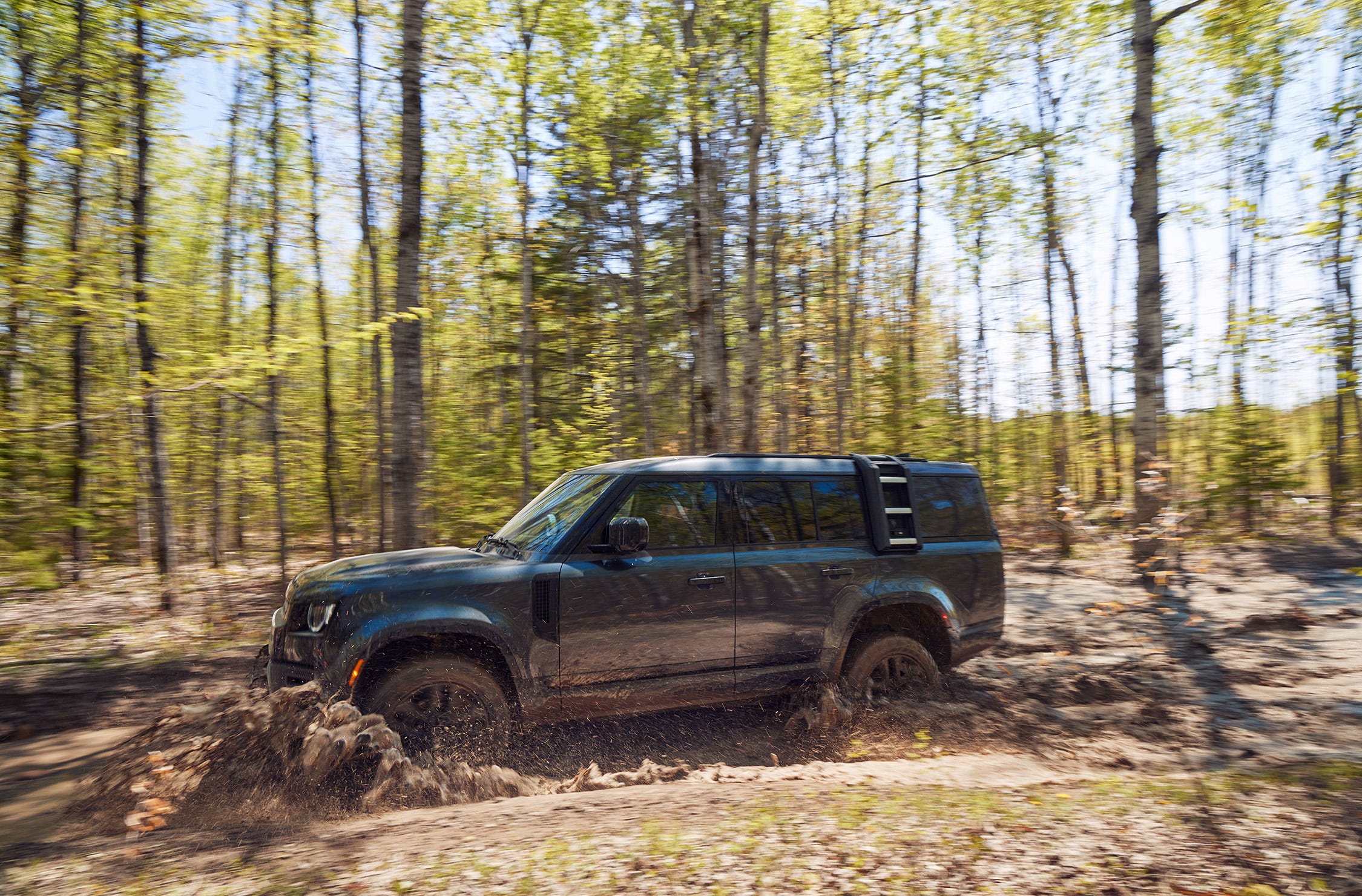
When the converter fails, drivers see a warning light urging them to stop the vehicle when it is safe to do so. If the fault is ignored, the battery loses charge, the SUV gradually coasts to a stop and its exterior lighting goes dark, a sequence with obvious risk in traffic or at night.
JLR has identified 8,100 Defenders and 10,973 Range Rover Sport models with a converter that could fail, alongside 3,849 Range Rovers and 552 Discovery models.
The remaining ranges carry far smaller numbers: 79 Jaguar F-Pace, 76 Range Rover Velar, 35 Range Rover Evoque, 10 Jaguar E-Pace and just three Land Rover Discovery Sport vehicles are affected.
Jaguar remains JLR's performance marque within the same corporate stable as Land Rover and Range Rover, and it is represented in this recall through the E-Pace and F-Pace, its smaller SUV lines, rather than through any of its sports models.
Between April and September 2026, JLR received 393 claims and field reports connected to the converter fault. The company has said no injuries or accidents have resulted from the issue over that period, despite the scale of vehicles involved across both recalls.
The remedy this time is a software update rather than a hardware replacement. Dealers will install it at no cost to owners, correcting the software bug and adding a limp-home mode that activates automatically if the DC-DC converter drops offline while the vehicle is in use.
Owners of the identified vehicles are due to be notified by 13 November 2026. That gives JLR a window of roughly six weeks from the filing to reach every affected owner before the regulatory deadline passes.
Range Rover, the luxury SUV brand built under Land Rover, is known for combining off-road ability with premium features, and several of its model lines, including the flagship Range Rover and the Range Rover Sport, sit among the vehicles now being called back for the fix.
The recall lands as JLR works through the aftermath of its far larger April action, which touched more than seven times as many vehicles. That the same converter fault has resurfaced in a new form points to a diagnosis process still catching problems the first repair missed.
For owners, the practical difference is minor: a dealer visit for a software flash rather than a parts swap. For JLR, the repeat filing on the same component within five months is the awkward detail regulators and buyers alike will note.
Support the content you love — it’s free 🎉
Add Worthbury as a preferred source on Google. Our stories will be more likely to appear in Google’s Top Stories. It’s free and supports our team. Thank you!
Add as preferred sourceYou can remove us any time in Google’s source preferences.
Thank you — you’re all set 🎉
Worthbury is now one of your preferred sources, so our briefings are more likely to appear in Google’s Top Stories.
This briefing is published daily using an AI-powered system crafted by Worthbury's team and finely tuned to meet our editorial standards. While we continuously test and review the output, mistakes can sometimes happen. Tell us if you spot one.
Images: Jaguar Land Rover