
Jonathan Adler opens gifting concept store on Lexington Avenue
The gifting-focused shop is the brand's first in the neighbourhood and third in New York.


Jonathan Adler has opened a new store at 1019 Lexington Avenue on the Upper East Side. The shop is the home decor brand's first in the neighbourhood and joins its two other New York locations, in SoHo and on the Upper West Side, along with stores in Chicago, Miami and London.
The new retail concept
The opening is the first expression of a new retail concept built around gifting, neighbourhood discovery and the brand's most recognisable categories. Adler said customers had been asking for an Upper East Side store for years. "Who am I to say no?" the founder told the trade press.
Alison Bergen, president of Jonathan Adler, framed the shop as a deliberately smaller experiment. "This store is an opportunity to think differently about how customers experience Jonathan Adler in person," she said, describing a highly edited, approachable and discovery-driven space that still carries the brand's personality and point of view.
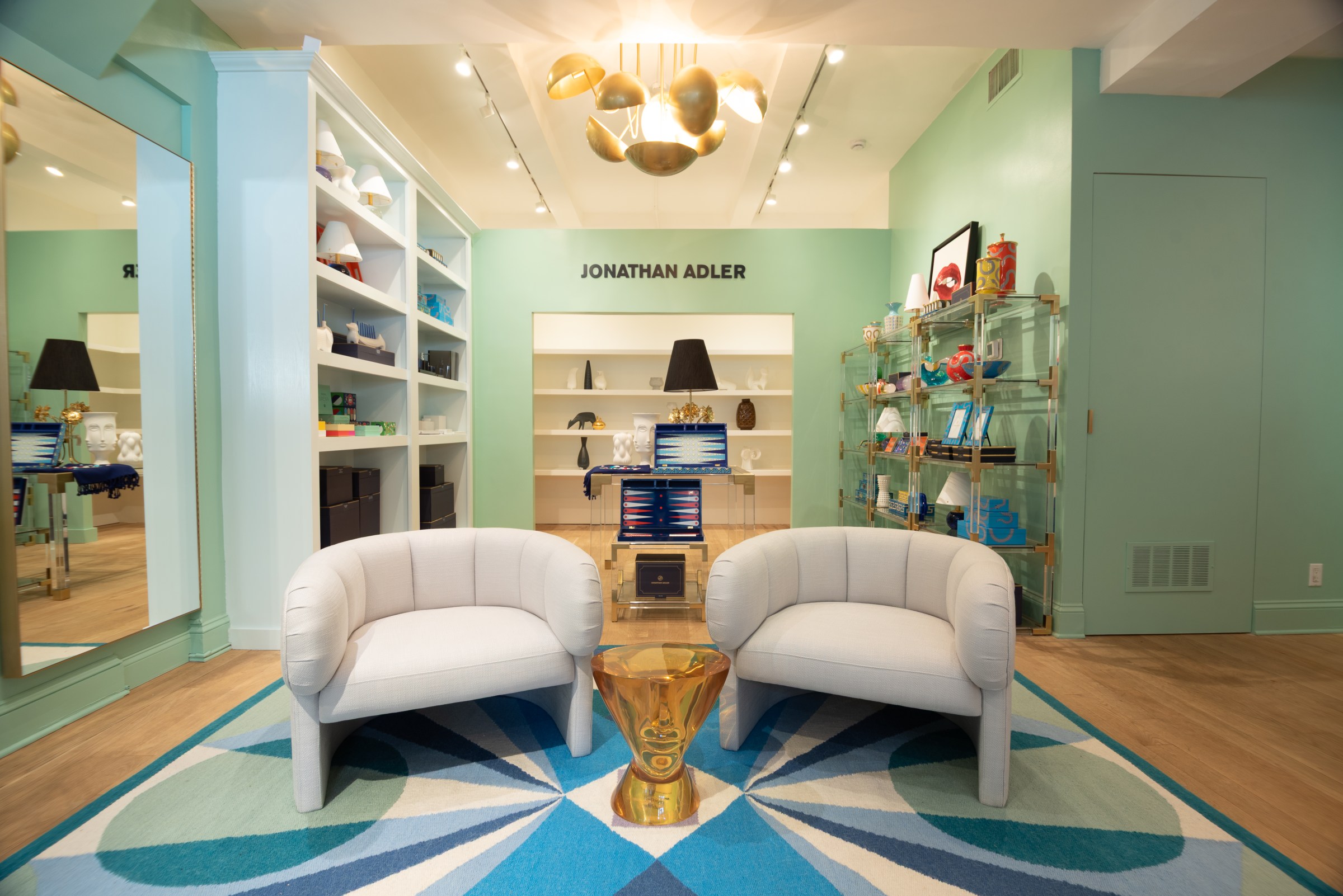
Adler called the 850-square-foot store "a colorful little jewel box full of everything you need to gift your hostess, or yourself." Striped accents nod to the signature motif of his Vice Collection. For a limited time the shop will carry a capsule of archival pieces signed by the designer himself.
A new candle "scent bar" gives the recently revamped candle assortment a dedicated home in its entirety. The merchandise mix is tightly edited around pottery, tabletop, games, decor and what Adler describes as "unexpected objects," assembled in a location-specific assortment rather than a full-line store.
Games lead the momentum
Games are one of the categories posting double-digit growth and selling out consistently, including the brand's mahjong and backgammon sets. "We are sort of the OGs in the game space," Adler said, citing the lacquer technique behind the sets and the challenge of keeping special pieces in stock.
"We're living in a Mahjong world," Adler said. "I've lost all my friends to Mahjong. They've all been taken over like zombies." Bergen put the appeal down to a nostalgia-driven way of entertaining: game nights with small plates and a cocktail or a mocktail rather than formal seated dinners with name cards.
New colours and patterns of mahjong sets arrive every season and all perform, Adler said, but "our biggest challenges have been keeping them in stock. They're very special pieces." Bergen added that the lacquer technique requires a great deal of work and craft.
Decorative accessories are the company's largest volume driver across channels, and within that category it is pottery and games, Bergen said. She described the Upper East Side customer as social, hosting, gifting when hosted and wanting to refresh a space before guests arrive.
Wholesale expansion
The brand has been owned by American Exchange Group and Consortium Brand Partners since December 2024. Since that acquisition the company has added roughly 50 new brick-and-mortar wholesale doors and shifted its digital marketing strategy, with wholesale newly central to the plan going forward.
Bergen, who became president last April, said wholesale had not historically been the focus of the business. Now it is. Bloomingdale's alone will take about 20 doors featuring decorative accessories, games and tabletop, with serveware, appetiser plates, dessert plates, glassware and mugs rather than formal china.
Neiman Marcus remains the brand's biggest partner and carries the broadest range of the offer. "Our business is super strong there," Bergen said. The brand also sells through Macy's, Liberty London and Browns in the U.K., plus a large specialty store business.
A Michael's partnership launched last April spans DIY craft kits, home decor, entertaining essentials and customisable ceramic objects. Bergen said collaborations and cross-branding have always been a strong suit, and the company wants to reach seasonal markets with strong, curated stories across categories.
In January the company will show its fall 2027 line, ranging from dinnerware and glassware to tablescaping, much of it artisanal and made in Europe. Bergen said the aim is for customers to want "the whole thing," to throw a dinner party just so they can use every piece.
California is next on the map. The brand historically traded in San Francisco and Los Angeles and left those markets, Bergen said, and "we still think we belong there for sure," so the hunt is on for a way back.

Adler also returned the story to his pottery studio, calling himself "a potter" rather than a socialite and the studio "the engine of all our creativity." Bergen said every detail begins there: brass snail knobs start as pottery before being cast in metal, a craft story she wants to tell more visibly.
Bergen sees the fourth quarter as an ideal moment to open, a good time to become a "go-to everyday shop." She said the small format is a deliberate test of how tightly the multi-category brand can edit itself while serving a client who is arriving to gift and entertain.
Support the content you love — it’s free 🎉
Add Worthbury as a preferred source on Google. Our stories will be more likely to appear in Google’s Top Stories. It’s free and supports our team. Thank you!
Add as preferred sourceYou can remove us any time in Google’s source preferences.
Thank you — you’re all set 🎉
Worthbury is now one of your preferred sources, so our briefings are more likely to appear in Google’s Top Stories.
This briefing is published daily using an AI-powered system crafted by Worthbury's team and finely tuned to meet our editorial standards. While we continuously test and review the output, mistakes can sometimes happen. Tell us if you spot one.
Images: Jonathan Adler