
L'Oréal Travel Retail and Avolta target 10% refillable fragrance by 2030
The plan also adds low-emission transport and CSR training for frontline beauty advisors.


L'Oréal Travel Retail signed a joint Sustainability-Linked Business Plan with Avolta, a global travel experience retailer, in Cannes this week. The agreement sets a 2030 target of 10% refillable solutions across the French beauty giant's core fragrance categories at its international travel hubs.
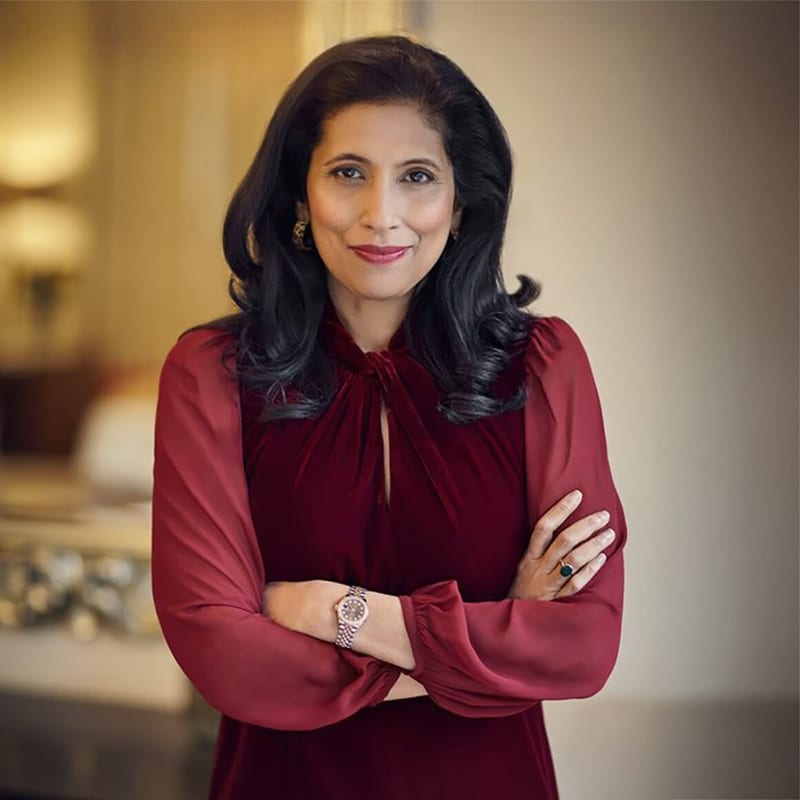
The two companies presented the plan at TFWA World Exhibition & Conference 2026, the duty-free and travel retail industry's summit in Cannes, France. Eva Yu, President of L'Oréal Travel Retail, signed the agreement alongside Nicolas Girotto, Chief Commercial Officer at Avolta.
The roadmap is built around three operational commitments. First, expanding refillable beauty formats. Second, lowering supply chain emissions through low-emission transport modes and optimised truckload capacity. Third, scaling circular solutions across the retailer's duty-free network.
Avolta operates across airports, motorways, cruise terminals and rail hubs, and combines travel retail with food and beverage. The partnership gives L'Oréal Travel Retail direct reach into those environments, where refill stations are the mechanism behind the 10% goal.
Why refillable now
L'Oréal Travel Retail cites market data showing 80% of Gen Z shoppers look for sustainable beauty products in Duty Free. That figure is the commercial logic behind the 2030 target: the group is betting that refillable formats answer a demand its youngest travelling customers already express.
L'Oréal Luxe, the unit that houses the group's prestige fragrance houses, is the natural home for much of this work. We have followed L'Oréal's wider strategy closely, including its reported progress toward a stake in Armani Group, where the founding family's will set an 18-month clock on a 15% sale.
The refill push lands against a fragrance market that is climbing. We reported Givaudan's nine-month sales beat forecasts as fine fragrance climbed 15.3%, a signal of the demand the travel retail arm is now trying to capture in a more circular form.
Beyond the products themselves, the plan rolls out dedicated Corporate Social Responsibility training modules for frontline beauty advisors at international travel hubs. That turns the target into an operational programme rather than a packaging commitment alone, reaching the staff who sell the format to travellers.
Transport is the quieter half of the agreement. By shifting to low-emission transport modes and tighter truckload capacity, the plan aims to cut the emissions tied to moving fragrance stock between the group's hubs and the retailer's airport, cruise and rail locations.
What the plan covers
Eva Yu described the agreement as translating shared sustainability commitments into what she called measurable operational steps. "Together with Avolta, we are translating shared sustainability commitments into measurable operational steps, expanding refillable beauty and lowering our logistics footprint across key travel hubs," she said.
The signature at TFWA matters because that is the forum where duty-free buyers and brands set their commercial calendars. Putting the plan on that stage signals that refillable fragrance is now a negotiating point in travel retail, not a side project bolted onto existing ranges.
Avolta's scale gives the target its weight. As a retailer combining travel retail and food and beverage across four kinds of transport hub, it is one of the largest counters through which L'Oréal's fragrance reaches travelling shoppers, which is what makes a 10% refill figure plausible rather than aspirational.
The plan carries no disclosed financial terms and no penalty structure for missing the 2030 figure. Sustainability-linked agreements typically tie pricing or rebates to hitting targets, but neither company has said what happens if the 10% goal is not reached on time.
Young shoppers are the explicit audience. The 80% Gen Z finding L'Oréal Travel Retail cites puts the refillable push behind a demographic the duty-free channel has struggled to convert, and the group is presenting refill stations as the bridge between that demand and the till.
The agreement also reaches the people who work the counters. Frontline beauty advisors will receive CSR training modules, meaning the sustainability story is meant to be told at the point of sale rather than only in the boardroom or on packaging.
What comes next
Neither company has set interim milestones between now and 2030, and no launch date for the first refillable formats was given at the signing. The measurable outcome remains the 10% figure, with the coming TFWA cycle the likely stage for the first product announcements.
Support the content you love — it’s free 🎉
Add Worthbury as a preferred source on Google. Our stories will be more likely to appear in Google’s Top Stories. It’s free and supports our team. Thank you!
Add as preferred sourceYou can remove us any time in Google’s source preferences.
Thank you — you’re all set 🎉
Worthbury is now one of your preferred sources, so our briefings are more likely to appear in Google’s Top Stories.
This briefing is published daily using an AI-powered system crafted by Worthbury's team and finely tuned to meet our editorial standards. While we continuously test and review the output, mistakes can sometimes happen. Tell us if you spot one.