
Puig targets over €8bn in sales by 2032 at its first Capital Markets Day
The Barcelona group also targets a 22.5 percent adjusted EBITDA margin and over €900 million of free cash flow by then.


Puig wants to cross 8 billion euros in annual sales by 2032, a target laid out on Tuesday at the Spanish beauty group's first Capital Markets Day in Madrid. The roadmap, branded Vision 2032, comes less than two years after the company joined the stock exchange.
The maker of Carolina Herrera, Rabanne and Jean Paul Gaultier beauty and fashion closed 2025 with net revenues of 5.04 billion euros. Hitting the new mark means adding roughly 3 billion euros to that base over the next six years, almost entirely from what it already sells.
José Manuel Albesa, chief executive officer of Puig, put the plan plainly. "Vision 2032 is our plan to scale what works, profitably," he said in a statement issued before the event opened. The emphasis is on organic growth, not on buying up rivals.
Alongside the revenue goal, Puig is introducing a fresh profitability yardstick: an adjusted EBITDA margin of more than 22.5 percent. Its free cash flow conversion target sits above 50 percent of adjusted EBITDA, which the company says amounts to more than 900 million euros in 2032.
The Barcelona-based group, which lists itself as a fashion and fragrance company built around luxury perfumes and cosmetics, also recommitted to paying out 40 percent of earnings as dividends. Its year-end leverage threshold stays at two times, a figure the company has now carried over into the new plan.
By 2032 Puig has set itself two rankings to hold at once: a top-four premium beauty company and a top-two fragrance player. Those ambitions mark out the ground rather than simply the arithmetic, putting the house in direct competition with the sector's largest groups.
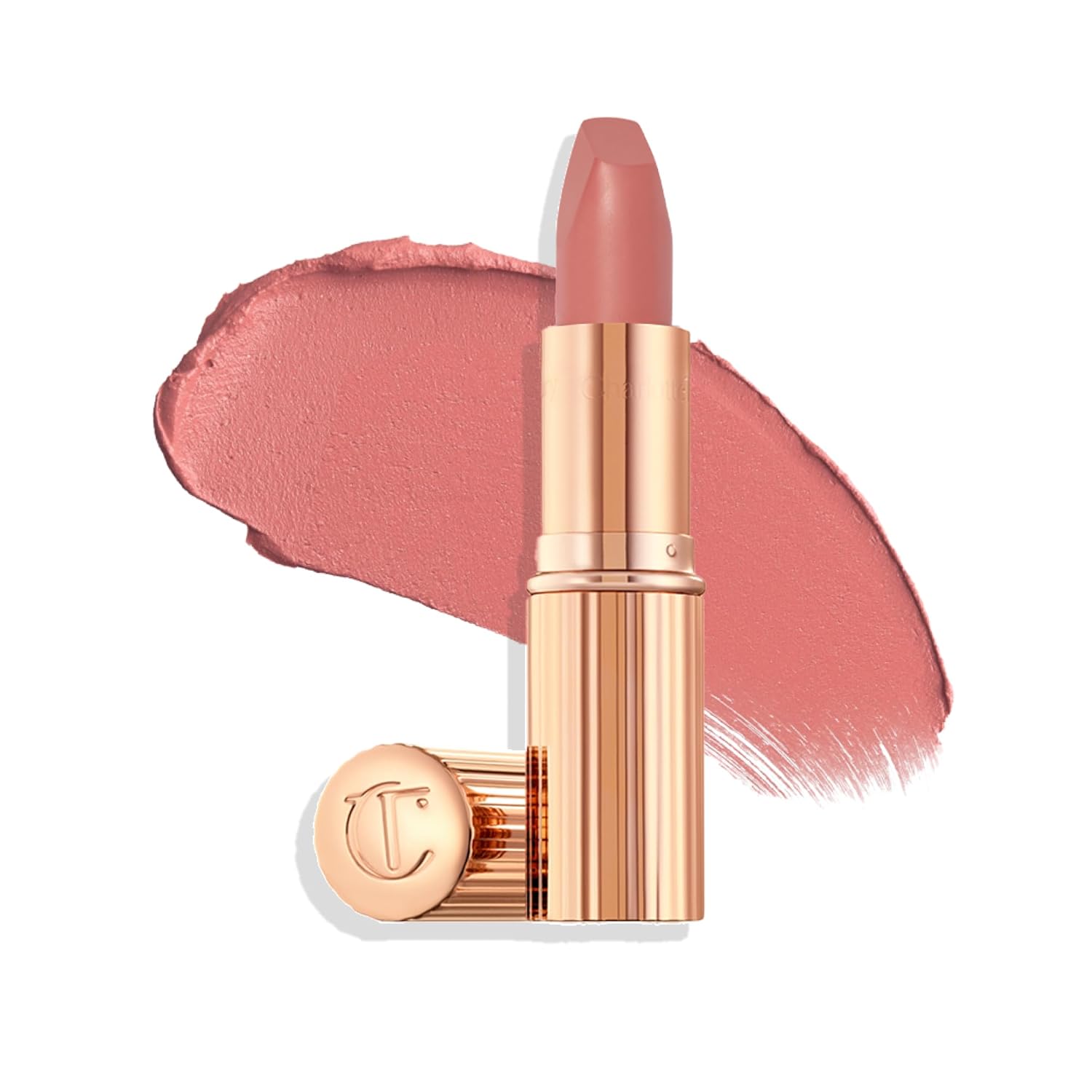
The strategy rests on four portfolio priorities: prestige fragrances, niche fragrances, Charlotte Tilbury and dermocosmetics. Each is a category Puig already operates in, and the plan's message is that the existing brands, not a parade of new ones, will carry the growth.
Geographically the objectives split in two directions. Puig means to reinforce its standing in EMEA, Latin America and travel retail, where it is strongest, while stepping up growth and unlocking openings in North America and Asia-Pacific, the two markets where it sees headroom.
The operating model is being reworked around global brands, global markets and global functions. The aim, the company says, is to speed profitable growth and capture the benefits of scale while leaving creative autonomy inside each house untouched.
A family house turns a page
Marc Puig, executive chairman, framed the plan as the next chapter of a long story. "Puig enters this next chapter from a position of strength," he said. "Today, we are stronger than at any point in our over 110-year history."
He credited a culture defined by family ownership, professional management and an identity the company calls a "home of creativity." Taken together, he argued, those things have carried Puig past 5 billion euros in net revenues in 2025, more than tripling the figure of five years earlier.
Over that stretch the group describes itself as the fastest-growing multibrand premium beauty company, a claim attached to the 2020 to 2025 window rather than to any single quarter. It is the kind of boast a first investor day is built to deliver.
Acquisitions still have a part to play, but a restrained one. "The plan is grounded in organic growth from the existing portfolio, complemented by scaling acquisitions that add distinctive brands, capabilities or exposure to attractive categories and market," Marc Puig said.
The chairman drew a line between two ways of running a house of brands. "We will continue to be curators of brands, not aggregators," he said, "preserving each Love Brand's identity and creative autonomy, while providing access to Puig's global capabilities and scale."

What it means after the reorganisation
Puig has traded as a listed company only since 2024, which makes Vision 2032 its first full public strategy document. The figures it has published today are the yardsticks the market will now hold against every results release between now and the end of the decade.
The company's next steps are the mechanics of the model itself: consolidating the global functions, appointing the people who will run them, and folding the plan into the numbers quarter by quarter. No date for the next update was given beyond the plan's 2032 horizon.
Support the content you love — it’s free 🎉
Add Worthbury as a preferred source on Google. Our stories will be more likely to appear in Google’s Top Stories. It’s free and supports our team. Thank you!
Add as preferred sourceYou can remove us any time in Google’s source preferences.
Thank you — you’re all set 🎉
Worthbury is now one of your preferred sources, so our briefings are more likely to appear in Google’s Top Stories.
This briefing is published daily using an AI-powered system crafted by Worthbury's team and finely tuned to meet our editorial standards. While we continuously test and review the output, mistakes can sometimes happen. Tell us if you spot one.
Images: Puig