

Woolrich Europe goes fur-free from January 2027 under new owner BasicNet
New garments with animal fur stop by December 31, 2026, and the brand joins a programme backed by 1,700 fashion names.


Woolrich Europe has formally committed to ending its use of fur, joining the Fur Free Alliance's Fur Free Retailer programme, which is backed by 1,700 brands and retailers worldwide. New collections from January 1, 2027 will be fur-free, the brand's first such policy since its founding.
The commitment lands almost a year after BasicNet's November 2025 acquisition of Woolrich for the European, Turkish and Russian Federation markets. The Italian fashion group bought the brand from L-Gam, the Luxembourg-based investment fund, and the change of ownership has brought new policies with it.
Woolrich will stop producing new garments with animal fur by December 31, 2026. Existing fur products stay on sale until their stock runs out, so shelves will carry them for some months after the policy takes effect. The move follows over 200,000 e-mails from activists and demonstrations outside stores across Europe.
The Fur Free Alliance launched a campaign at the September 2025 fashion weeks asking Woolrich to follow competitors such as Canada Goose, Moncler, Napapijri and Parajumpers in adopting a fur-free policy. Those brands had already ended use of fur from animals including coyotes and raccoon dogs.
Why Woolrich is making the change
Woolrich was founded in 1830 and is regarded as the oldest outdoor apparel company in the United States, having supplied garments for the American Civil War and Antarctic expeditions. Joh Vinding, president of the Fur Free Alliance, noted the brand began making fur-trimmed coats for fur trappers.
The label now operates 33 monobrand and outlet stores worldwide, 23 of them in the European Union. Its European stores will join the fur-free initiative, and Woolrich Europe says it is working to extend the commitment to its business outside Europe as well.
Shely Bryan, head of the Fur Free programme at the Humane World for Animals charity, said the decision sends a message to the European Commission that fur is cruel and is no longer fashionable, and that the time has come for a definitive EU ban on breeding animals for fur.
Bryan added that the number of animals bred and killed for fur has fallen 86% since 2014, and that demand will fall further as more brands follow Woolrich. The charity, active in over 50 countries, was previously known as the Humane Society International.
Vinding called the move a sign of the times, contrasting Woolrich's fur-based origins with its new policy. He said BasicNet clearly understands consumers want nothing to do with an archaic fur industry and are demanding more ethical materials, congratulating the group for helping the brand into the 21st century.

The political backdrop
The decision comes against a regulatory push. The European Commission is weighing a response to the Fur Free Europe citizens' initiative, which gathered over 1.5 million signatures calling for a ban on breeding animals for fur and on marketing fur products throughout the European Union.
Fur breeding is already illegal in 24 European countries. Israel has banned the sale of furs, as have 16 cities in the United States and the whole state of California. Switzerland recently banned importing and selling fur products obtained through cruel practices.
The Fur Free Alliance is an association of 45 animal rights organisations active in over 30 countries. It has worked in recent years with labels such as Gucci, Armani, Prada and Hugo Boss on corporate policies banning fur, and in 2023 ran a similar campaign against Max Mara with what the group called positive results.
For Woolrich, the fur question arrived with its new owner. BasicNet announced its acquisition two months after the Fur Free Alliance campaign began in September 2025, and the group has now aligned the brand with the wider industry's retreat from fur.
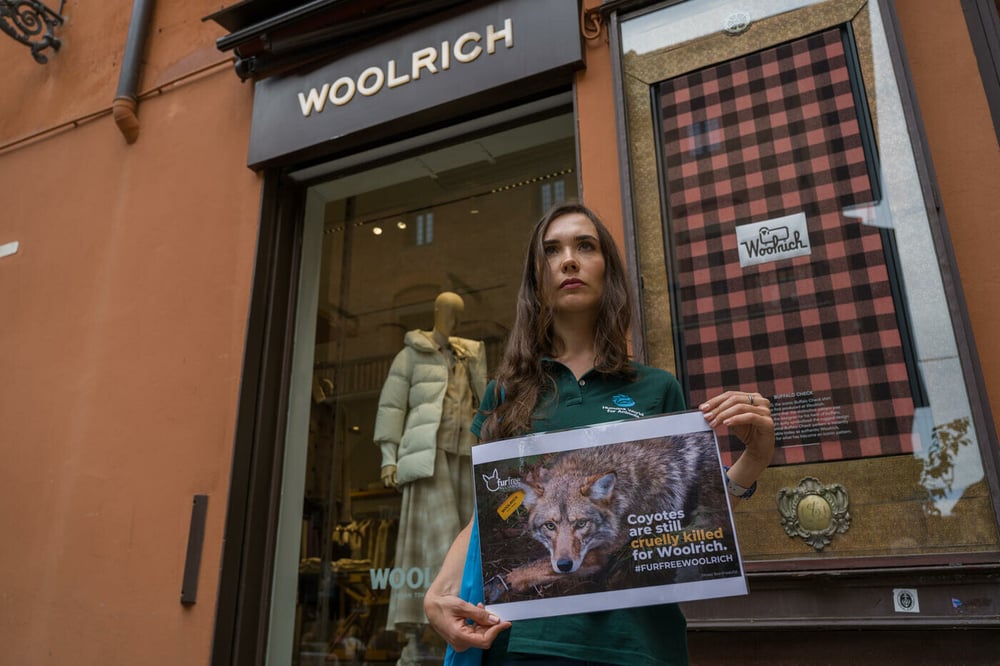
The old stock clears while the new direction starts. Shoppers will still find fur garments in Woolrich Europe's 23 EU stores for the coming season, even as the production lines behind them have stopped. The brand has not put a date on when leftover fur items finally sell out.
The fur-free commitment covers new collections from January 1, 2027. Woolrich Europe says its European stores join the initiative, and it is working to carry the same commitment to its extra-European business, though it has not set a date for that extension.
The announcement closes a year in which Woolrich's fur use became a public target. Demonstrators stood outside the brand's Bologna headquarters during the campaign, and the decision now answers a pressure campaign that combined e-mails, protests and a direct appeal to the brand's new Italian ownership.
Support the content you love — it’s free 🎉
Add Worthbury as a preferred source on Google. Our stories will be more likely to appear in Google’s Top Stories. It’s free and supports our team. Thank you!
Add as preferred sourceYou can remove us any time in Google’s source preferences.
Thank you — you’re all set 🎉
Worthbury is now one of your preferred sources, so our briefings are more likely to appear in Google’s Top Stories.
This briefing is published daily using an AI-powered system crafted by Worthbury's team and finely tuned to meet our editorial standards. While we continuously test and review the output, mistakes can sometimes happen. Tell us if you spot one.
Images: FashionNetwork