Accor closes in on hotel deal at Dubai Pearl, dormant for two decades
The revived masterplan is now double the size of the original, and Accor's own luxury brands are not expected to anchor it.


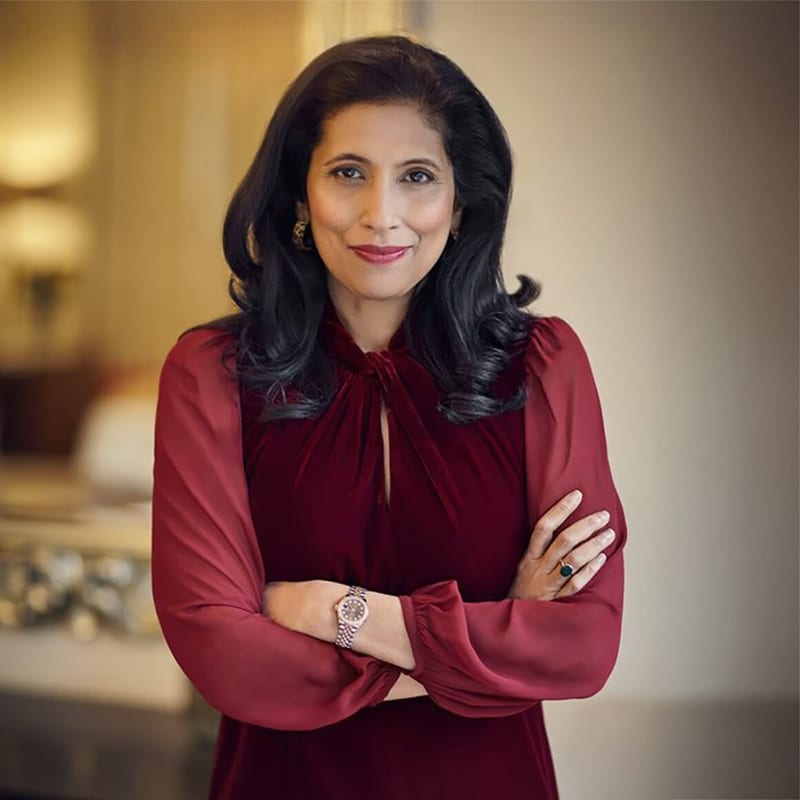
Accor is close to signing a hotel deal at the long-dormant Dubai Pearl site, more than two decades after the project was first announced. Duncan O'Rourke, the group's chief executive for the Middle East, Africa and Asia Pacific's economy, midscale and premium brands, told AGBI a signing could come as early as the end of this year or the start of next.
"We're going to be there, we want to be there. We have great developers and great products," O'Rourke said. "Probably by the end of this year, beginning of next, we'll get some pencils sharpened." The site sits in Al Sufouh, at the base of the Palm Jumeirah land reclamation scheme.
Dubai Pearl is owned by Dubai Holding, the investment company controlled by the emirate's ruler. AGBI first reported in July that development had resumed there, with a source at the company describing it as now one of Dubai Holding's main mega projects after years of inactivity.
How much bigger the new plan is
O'Rourke said the revived masterplan is double the size of the original: Dubai Development Authority plot details put the area at roughly 23 football pitches. It remains unclear whether the project will keep the Dubai Pearl name or be rebranded entirely once a developer signs on.
Accor itself is unlikely to be the site's anchor operator, O'Rourke said, despite the group's proximity to the deal. "I haven't heard that Accor will be the anchor, but I know we're looking at Ennismore and luxury brands on the Pearl," he said, pointing instead to a lifestyle-led approach.
Ennismore is the lifestyle hotel group majority owned by Accor, and its stable includes Hoxton, Mondrian, Delano and Banyan Tree. Accor's own luxury brands, Raffles, Fairmont and Sofitel among them, are apart from that expected line-up. Accor describes itself as a global hospitality leader powered by more than 290,000 staff.
O'Rourke compared the ambition to Atlantis the Palm, which anchors Palm Jumeirah, and to the flagship hotel expected eventually at Palm Jebel Ali. Dubai Pearl, he argued, will need a similarly landmark property of its own once the masterplan's operator roster is finalised and building resumes at scale.
Ennismore and Dubai Holding have already worked together in the emirate. The pair split the former state owned Caesars Palace resort at Bluewaters into two separate hotels, a Banyan Tree and a Delano, giving both companies a template for how a shared site can be divided between brands.
Two decades of false starts
Dubai Pearl was first announced in 2002 by Omnix Group, a privately held Qatari company, envisioned as a 20 million square foot mega development with a 73 storey centrepiece tower, more than 60 restaurants and a 1,600 seat theatre. Seven five star hotels were originally planned, including versions of Las Vegas's MGM Grand and Bellagio.
Construction stopped in 2006. Abu Dhabi's Al Fahim Group took over the project in 2007 and rebranded it Pearl Dubai, only for the 2008 financial crisis to trigger a cascade of investor withdrawals from the site over the following years.
Dubai International Financial Centre Investments had pledged AED3 billion, or $815 million, to buy 29 floors of an east tower. It walked away having paid just $14 million. A Hong Kong investor group, Chow Tai Fook, then injected close to $2 billion in 2014, promising handovers by 2017 that never came.
A 2016 audit put accumulated losses at AED2.5 billion, with liabilities of AED6.22 billion against assets of AED4.27 billion. An official company letter at the time stated plainly that Pearl did not have enough cash to pay off liabilities or settle court cases against it.
The rusting, skeletal structure was finally demolished in stages. Work began in late 2022, and controlled explosions brought the towers down in January 2023, with tremors felt across neighbouring districts. The site was cleared entirely by early 2024, two years before O'Rourke's comments to AGBI.
What this adds to Accor's regional push
A Dubai Pearl signing would extend a run of Middle East activity for Accor's stable of brands. We reported that the Hoxton, an Ennismore brand, signed its first Middle East hotel with a Dubai Media City opening, part of the same lifestyle led expansion O'Rourke described for the Pearl site.
We have also tracked Accor's wider strategy of moving through acquisitions rather than organic build outs, having covered how the group turned to acquisitions in India after its Treebo partnership collapsed. Raffles and Fairmont, two of the luxury brands O'Rourke named, feature in our reference guide to the world's most luxurious hotel brands.
No developer, operator agreement or financing structure for Dubai Pearl has been made public, and Dubai Holding did not immediately respond to AGBI's request for comment on the project's next steps or its eventual name.
O'Rourke's timeline points to a signing within months rather than years, a marked change of pace for a site that has spent most of the past two decades either stalled, in dispute or being torn down floor by floor.
Support the content you love — it’s free 🎉
Add Worthbury as a preferred source on Google. Our stories will be more likely to appear in Google’s Top Stories. It’s free and supports our team. Thank you!
Add as preferred sourceYou can remove us any time in Google’s source preferences.
Thank you — you’re all set 🎉
Worthbury is now one of your preferred sources, so our briefings are more likely to appear in Google’s Top Stories.
This briefing is published daily using an AI-powered system crafted by Worthbury's team and finely tuned to meet our editorial standards. While we continuously test and review the output, mistakes can sometimes happen. Tell us if you spot one.
Image: Hotelier Middle East