Delvaux names Richemont's Yanina Novitskaya as CEO, succeeding Jean-Marc Loubier
She takes over on 1 December after a handover understood to have been planned for more than a year.


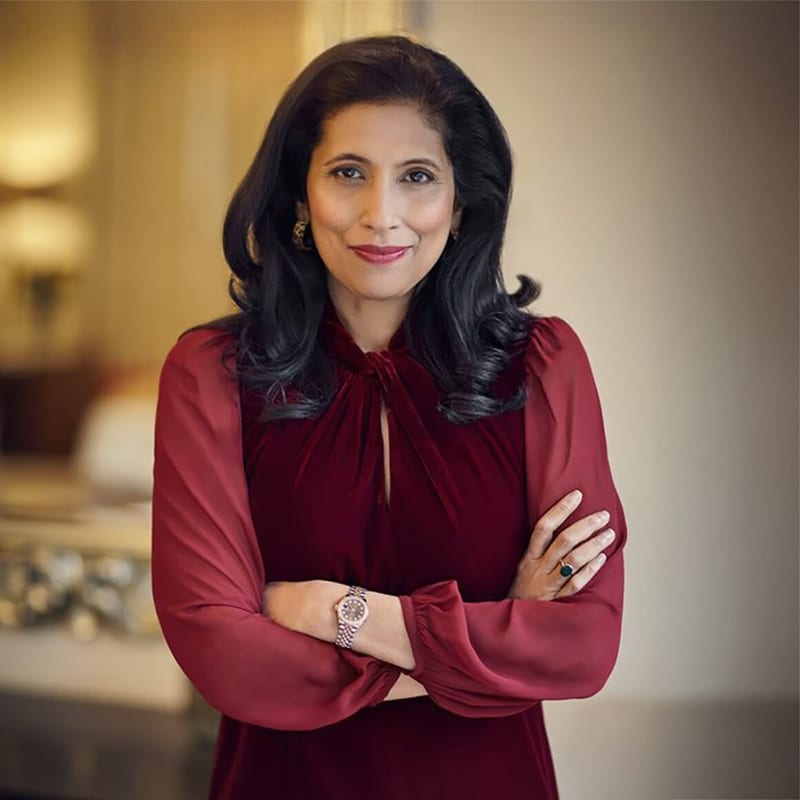
Delvaux has named Yanina Novitskaya as its next chief executive, effective 1 December. She joins from Cartier, where she has spent the last four years running the jeweller's business across southeast Asia and Oceania, and moves to Delvaux after 19 years inside parent group Richemont.
Novitskaya will report to Philippe Fortunato, chief executive of Richemont's fashion and accessories maisons, and will be based at Delvaux's headquarters in Brussels. She is a graduate of Moscow State University of Design and Technologies and built her Richemont career largely across Russia, Ukraine and the CIS before her Cartier posting.
She succeeds Jean-Marc Loubier, who is expected to leave Delvaux at the end of the year following what is understood to have been a handover planned for at least a year. His next move has not been disclosed. Fortunato thanked Loubier for having transformed Delvaux into a global luxury maison.
Why Delvaux matters inside Richemont
Delvaux is a Belgian leather goods house founded in 1829, and it is considered the oldest luxury leather goods maker in the world. It was the first to patent a leather handbag design, in 1908, and has been an official supplier to the Belgian royal court since 1883.
The house was among the first luxury goods firms to introduce seasonal collections, doing so in the 1930s, and it holds an archive of more than 3,000 patented styles. Its best known model, the top handled Brillant, was unveiled in 1958 and remains its bestseller.

Richemont is the Swiss luxury holding group that designs, manufactures and distributes Delvaux alongside Cartier, its flagship jewellery and watch maison, where Novitskaya spent nearly two decades before this move. We have covered how Cartier and Van Cleef & Arpels anchor Richemont's jewellery business, which delivered 72% of group revenue in its 2025 financial year.
Loubier's tenure was the story of Delvaux's international expansion. Under him the proportion of sales generated outside Belgium rose from 3% to about 85%, and the store count multiplied fivefold, with flagships opened on Fifth Avenue in New York, Bond Street in London and the Palazzo Reale in Milan.
Loubier held a minority stake in Delvaux as chief executive of First Heritage Brands before Richemont bought the house, and he returned for a second stint as chief executive five years ago after that acquisition. He had previously spent 16 years at LVMH Moët Hennessy Louis Vuitton, including a decade as executive vice president of Louis Vuitton.
He went on to lead the fashion houses Celine and Escada before returning to Delvaux. Fortunato said Novitskaya's knowledge of the luxury industry would be instrumental in leading Delvaux into its next chapter, and in strengthening what he called its distinctive positioning and product desirability.
Novitskaya, for her part, praised what she called Delvaux's remarkable heritage, distinctive savoir-faire and unique creative identity. Her brief, on the terms Richemont has set out, is to keep driving international growth while protecting the craftsmanship the house is known for.
A pattern across Richemont's leadership bench
The appointment lands weeks after Richemont named Anton Rupert co-deputy chairman alongside Bram Schot, splitting creative and governance duties as chairman Johann Rupert's own succession plan reaches the board. Novitskaya's move is a separate, operational change lower down the group, but it comes during the same period of visible leadership turnover.
Richemont's structure gives the Rupert family roughly 10% of group equity but 51% of voting rights, a dual class arrangement we have detailed in our account of how Richemont's brand empire spans jewellery, watches and fashion houses including Cartier and Chloé.
Delvaux is one of the smaller names inside that empire but one with an outsized craft reputation, standing alongside the eight specialist watchmakers and broader fashion houses that make up Richemont's non-jewellery businesses. Its leadership change is modest in scale but notable in a group where jewellery dominates revenue.
Novitskaya becomes the latest example of Richemont moving executives between its maisons rather than hiring externally, a pattern that has shaped several recent appointments across the luxury sector, where incoming chief executives are increasingly drawn from within a single group's own bench of leaders.
No financial terms of Novitskaya's appointment have been disclosed, and Richemont has not said whether Loubier will take on another role within the group or depart the industry entirely. His departure closes a second stint that reshaped Delvaux's international footprint over roughly a decade.
Support the content you love — it’s free 🎉
Add Worthbury as a preferred source on Google. Our stories will be more likely to appear in Google’s Top Stories. It’s free and supports our team. Thank you!
Add as preferred sourceYou can remove us any time in Google’s source preferences.
Thank you — you’re all set 🎉
Worthbury is now one of your preferred sources, so our briefings are more likely to appear in Google’s Top Stories.
This briefing is published daily using an AI-powered system crafted by Worthbury's team and finely tuned to meet our editorial standards. While we continuously test and review the output, mistakes can sometimes happen. Tell us if you spot one.
Images: Courtesy of Delvaux; Yanina Novitskaya Courtesy of Richemont