
Richemont names Anton Rupert co-deputy chairman in latest succession move
He joins Bram Schot, appointed to the same title in 2024, in a split of duties Johann Rupert calls central to long-term succession planning.


Richemont has named Anton Rupert, son of founder and chairman Johann Rupert, as non-executive co-deputy chairman of the board, effective immediately. He joins Bram Schot, who was appointed to the same title in 2024, and the pair will now share what the group calls complementary remits across governance and creative direction.
Who oversees what now
Anton Rupert takes charge of matters relating to the strategic product and communications committee across Richemont's maisons, an area the group says is central to its creative and commercial direction. Bram Schot takes responsibility for board and committee governance, including coordinating committees and the group's wider corporate governance framework.
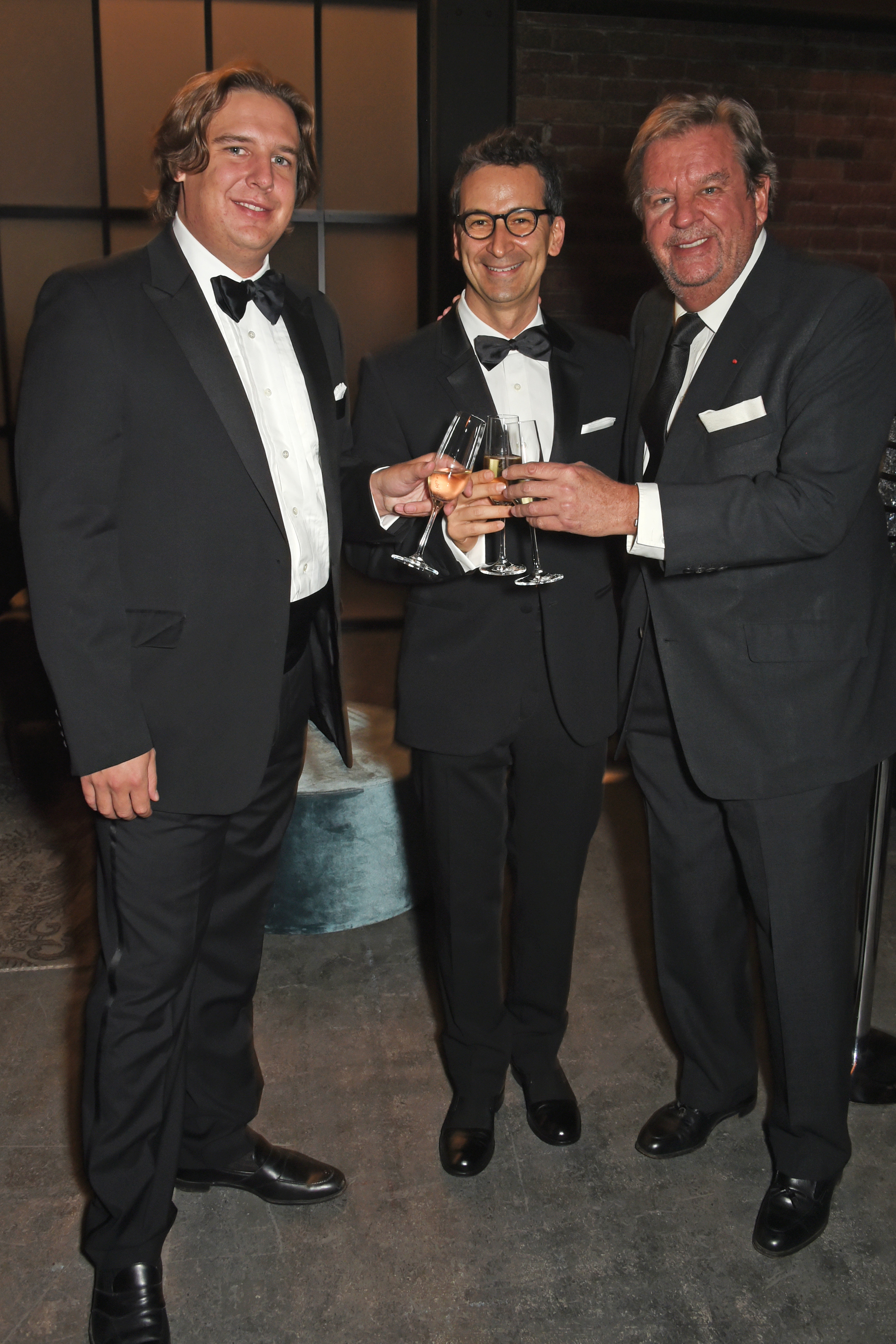
The appointment followed Richemont's annual general meeting this week, and the group frames the new division of labour as a commitment to robust governance at the co-deputy chairman level. It says the split ensures both strategic priorities and governance obligations get dedicated, non-executive attention rather than being folded into a single role.
Johann Rupert, Richemont's shareholder of reference, called his son's appointment an important step in the board's long-term succession planning. He said the company's strength has always rested on continuity through family involvement, rigorous governance and an unwavering commitment to creativity and craftsmanship across its houses.
Rupert said pairing Anton with Schot ensures each foundation gets proper attention: Anton safeguarding creative and product priorities that define the maisons, Schot ensuring governance remains, in his words, of the highest standard. Together, he said, they reflect a long-term view and the discipline to steward the group for future generations.
A cascade of appointments
The move extends a succession plan Johann Rupert set in motion two years ago, when Richemont named Nicolas Bos, the longtime chief executive of Van Cleef & Arpels, as group chief executive. Further changes followed at speed across the maisons that generate most of Richemont's revenue.
Louis Ferla was named to lead Cartier, and Catherine Renier took over at Van Cleef & Arpels. Rupert has said the reshuffle reflects a wave of senior executives approaching retirement age, after decades in which loyalty and long tenures left the group with a thin bench for transition planning.
In 2024, Rupert explained the thinking behind the changes: people tend to stay a very long time, he said, and loyalty runs up and down the organisation, until a group suddenly finds its senior executives all approaching retirement together. He said Richemont had to ask how to prepare for smooth transitions.
Why the family stake matters
Richemont is a Swiss luxury goods holding company that designs, manufactures and distributes high-end products, and its structure gives the Rupert family unusual reach over decisions like this one. A dual-class share arrangement lets the family hold roughly 10% of equity while controlling 51% of voting rights, as we have detailed in our guide to Richemont's brand empire.
That empire concentrates its strength in hard luxury. Jewellery Maisons alone delivered 72% of group revenue in the 2025 financial year, anchored by Cartier and Van Cleef & Arpels, alongside eight specialist watchmakers and a broader set of fashion houses under the same roof.
Anton Rupert's new remit over the strategic product and communications committee places him close to decisions affecting that portfolio, at a moment when questions about the group's smaller maisons have not gone away. We reported that a record jump in secondary watch market values had revived speculation over a possible sale of Panerai.
Neither this appointment nor Richemont's statement addresses that speculation directly, and the group has not said whether Anton Rupert's committee oversight extends to decisions about individual maisons' ownership.
What the split leaves unresolved
Richemont has not disclosed how long either co-deputy chairman is expected to serve in the role, nor whether one is being positioned to eventually succeed Johann Rupert as chairman outright. The company describes the arrangement only as reflecting the board's commitment to dedicated attention on both fronts.
The group is within a wider tier of conglomerates that dominate specific luxury categories rather than broad reach, a structure we mapped in our survey of the second-tier groups behind EssilorLuxottica and Swatch Group. Richemont's own succession discipline is increasingly part of how it is judged against that field.
Richemont has given no date for further leadership changes, though the pace of the past two years, from Bos's appointment through Ferla and Renier to this latest board move, suggests the succession process it describes is ongoing rather than concluded with Anton Rupert's arrival this week.
Support the content you love — it’s free 🎉
Add Worthbury as a preferred source on Google. Our stories will be more likely to appear in Google’s Top Stories. It’s free and supports our team. Thank you!
Add as preferred sourceYou can remove us any time in Google’s source preferences.
Thank you — you’re all set 🎉
Worthbury is now one of your preferred sources, so our briefings are more likely to appear in Google’s Top Stories.
This briefing is published daily using an AI-powered system crafted by Worthbury's team and finely tuned to meet our editorial standards. While we continuously test and review the output, mistakes can sometimes happen. Tell us if you spot one.
Image: Richemont