The Complete Guide to Luxury Events Worldwide
The month-by-month guide to the world's most important luxury events: fashion weeks, art fairs, watch shows, and trade conferences.
Fashion people know Fashion Week. Watch collectors know Watches and Wonders. Art dealers know Art Basel. But almost nobody has a complete map of the luxury events that matter across the full ecosystem — the calendar that turns a sector specialist into an industry leader.
The most important luxury events worldwide span six sectors, four continents, and roughly thirty recurring gatherings each year — from luxury industry conferences in Geneva and Cannes to luxury brand events during Milan Design Week and Art Basel. Most professionals attend two or three from their own sector and miss the rest.
The professionals building the most interesting careers — the ones landing board positions, cross-sector partnerships, and media features — are doing something different. They’re mapping the full year of luxury networking events and choosing strategically where to show up.
This is that map. A month-by-month guide to every major recurring luxury event worldwide: what each one is, who attends, which sector it serves, and whether it’s worth your time. Bookmark it. Return to it every December when you plan the year ahead.
How we selected these events
This guide includes only large, recurring events that have run consistently for at least five editions. We excluded one-off exhibitions, brand-specific product launches, and events with uncertain futures. The selection spans six luxury sectors — fashion, watches and jewellery, art, design, travel and hospitality, and retail — and covers events across four continents. Each event earns its place based on industry influence, the calibre of attendees, and the professional opportunities it creates beyond the show floor.
January: The year opens in Florence and Paris
Pitti Uomo — Florence, Italy
Sector: Fashion (menswear) · Typical timing: Mid-January · Duration: 4 days
Pitti Uomo is the world’s most influential menswear trade show, held at the Fortezza da Basso in Florence. Roughly 740 brands exhibit each edition, drawing over 20,000 buyers, journalists, and creative directors. Unlike the runway-focused fashion weeks, Pitti is a trade fair first — commercial deals happen on the floor, not in the front row. The guest designer programme (past names include Jil Sander and Raf Simons) adds editorial weight, but the real draw is the concentration of independent brands you won’t see anywhere else.
Who should attend: Menswear buyers, fashion journalists, brand founders, and anyone in luxury retail seeking emerging labels. Not ideal for professionals outside fashion — the cross-sector networking is limited compared to events later in the year.
Haute Couture Week — Paris, France
Sector: Fashion (haute couture) · Typical timing: Late January · Duration: 4 days
Organised by the Fédération de la Haute Couture et de la Mode, this is the most exclusive event on the fashion calendar. Only houses officially designated as haute couture members show here — think Chanel, Dior, Valentino, and Schiaparelli. Attendance is largely by invitation, and the audience skews towards private clients, top-tier press, and museum curators rather than commercial buyers. The January edition presents Spring/Summer collections.
Who should attend: Senior fashion executives, luxury PR professionals, editors, and high-net-worth clients. If you don’t already have relationships with the maisons, securing access is difficult — but the satellite events and presentations around Couture Week are more accessible and still valuable.
February–March: The fashion week circuit
Milan Fashion Week — Milan, Italy
Sector: Fashion (womenswear, menswear) · Typical timing: Late February · Duration: 6–7 days
Milan Fashion Week is controlled by the Camera Nazionale della Moda Italiana and remains the commercial powerhouse of the fashion week circuit. This is where Prada, Gucci, Versace, Dolce & Gabbana, and Bottega Veneta show — brands that generate billions in revenue and set the commercial direction of the industry. Milan’s shows tend to be more commercially minded than Paris’s, making it the better event for professionals focused on the business side of fashion rather than the editorial side.
Paris Fashion Week — Paris, France
Sector: Fashion (womenswear, menswear) · Typical timing: Late February to early March · Duration: 8–9 days
Paris Fashion Week is the longest-running and most prestigious of the four major fashion weeks. It closes the international circuit each season and features both the largest luxury conglomerates — LVMH and Kering show the majority of their portfolios here — and the most celebrated independent designers. The ready-to-wear shows run for over a week, with hundreds of presentations, dinners, and private events creating an intensity that no other fashion city matches. The September edition shows Spring/Summer collections; the February/March edition shows Autumn/Winter.
Who should attend: Fashion buyers, executives, journalists, and luxury marketing professionals. For non-fashion professionals, Paris Fashion Week’s fringe events — particularly the showrooms and industry dinners — offer better networking than trying to secure runway seats. For a deeper look at the full Parisian luxury calendar, see the complete guide to luxury events in Paris.
Art Basel Hong Kong — Hong Kong
Sector: Art · Typical timing: Late March · Duration: 5 days (2 preview, 3 public)
Art Basel Hong Kong is the premier art fair for the Asia-Pacific market, held at the Hong Kong Convention and Exhibition Centre. Around 240 galleries from over 40 countries exhibit, with a strong emphasis on Asian contemporary art alongside international blue-chip galleries. The first two days are VIP previews — this is where the serious collecting and deal-making happens. The public days draw over 80,000 visitors. Hong Kong’s position as a gateway between Asian and Western art markets makes this fair uniquely valuable for professionals working across both.
What luxury events happen in April? Watches and design take centre stage
Watches and Wonders — Geneva, Switzerland
Sector: Watches and jewellery · Typical timing: Mid-April · Duration: 7 days
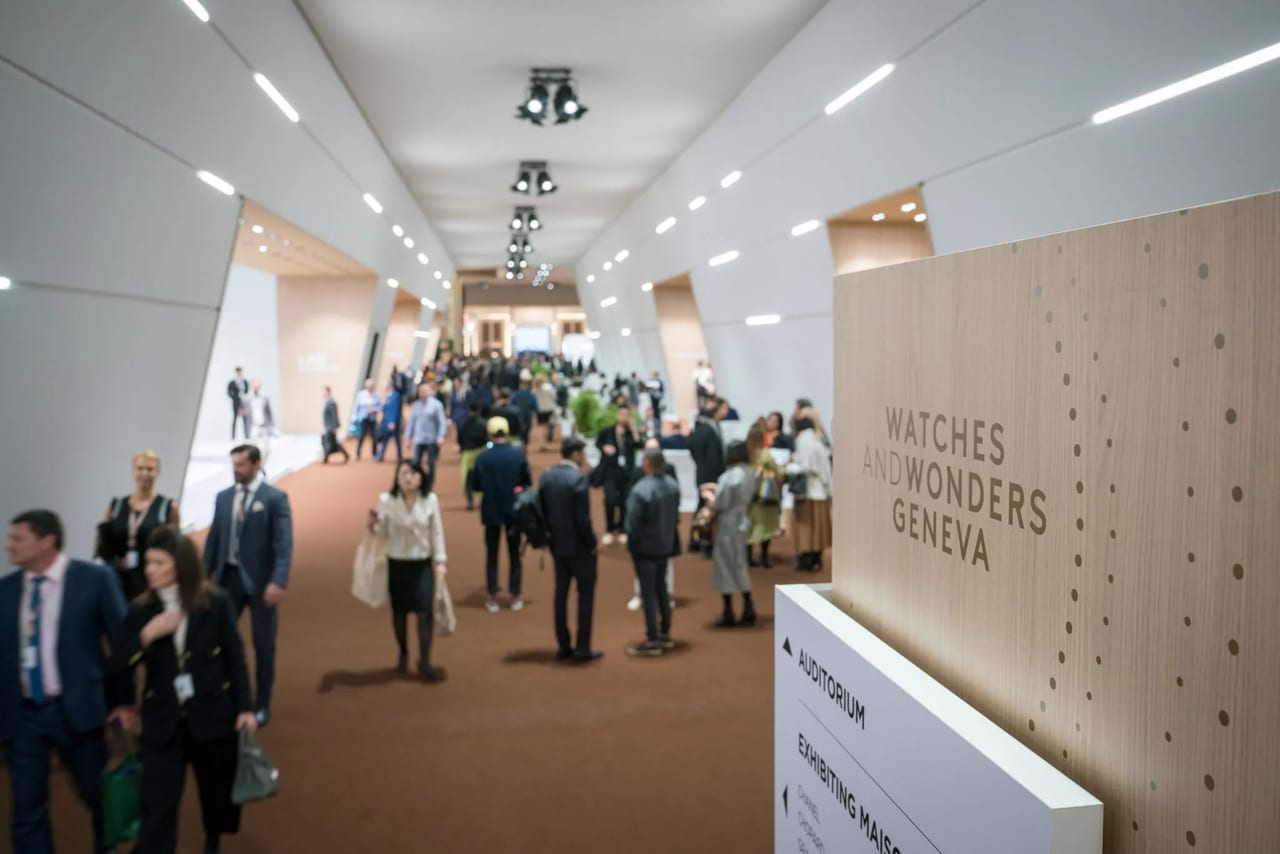
Watches and Wonders is the world’s largest luxury watch fair, held at Palexpo in Geneva. It is the successor to the former SIHH (Salon International de la Haute Horlogerie), rebranded and expanded in 2022 to absorb much of the exhibitor base that left the now-defunct Baselworld. Rolex, Patek Philippe, Cartier, IWC, and roughly 50 other maisons present new collections here. The first four days are reserved for trade professionals, press, and retail partners; the final three days are open to the public — a format that has made it the single most important week in the horological calendar.
Watches and Wonders draws approximately 50,000 visitors across the week, including the most senior executives in watchmaking, major retail partners, auction house specialists, and collectors. For anyone working in watches, jewellery, or luxury retail, missing this event means missing the year’s most important product launches and commercial conversations. The concentration of decision-makers in one venue for one week is unmatched in any other luxury sector.
Who should attend: Watch industry professionals at every level — from brand executives to independent retailers. Also valuable for luxury journalists, auction specialists, and investors evaluating the watch market. Less useful for professionals outside the watch and jewellery sectors, unless you’re specifically seeking cross-sector connections.
Salone del Mobile — Milan, Italy
Sector: Design and interiors · Typical timing: Late April · Duration: 6 days
The Salone del Mobile (Milan Furniture Fair) is the world’s largest design event, staged at the Fiera Milano fairgrounds in Rho. Over 1,800 exhibitors and 300,000 visitors attend each edition. But Salone’s influence extends far beyond furniture: the surrounding Milan Design Week (Fuorisalone) transforms the entire city into a showcase, with luxury fashion houses, automotive brands, and technology companies mounting elaborate installations in showrooms, palazzos, and public spaces. Hermès, Louis Vuitton, and Rolls-Royce regularly invest in Salone activations because the audience — architects, interior designers, real estate developers, and luxury consumers — overlaps heavily with their customer base.
Who should attend: Interior designers, architects, luxury real estate professionals, product designers, and brand executives exploring design collaborations. One of the best events for cross-sector networking — the overlap between fashion, design, art, and hospitality is genuine here, not forced.
May–November: Art biennale season
Venice Biennale — Venice, Italy
Sector: Art and architecture · Typical timing: Opens May, runs through November · Duration: 7 months (the vernissage preview is 3 days)
The Venice Biennale is the oldest and most prestigious international art exhibition, running since 1895. It alternates between art (odd years) and architecture (even years), though both are significant. The exhibition spans the Giardini, the Arsenale, and dozens of venues across Venice, with national pavilions representing over 80 countries. The vernissage — the three-day VIP preview in May — is the event within the event. This is when collectors, museum directors, gallery owners, and cultural ministers converge in Venice, and it generates more private dinners, foundation parties, and deal-making than any art fair.
Who should attend: Art professionals, luxury brand executives (particularly those with cultural sponsorship programmes), architects, and senior professionals who want exposure to the cultural elite. The vernissage is invitation-based and competitive; the main exhibition runs for seven months and is open to all.
June: Art Basel’s flagship and London’s collectors’ fair
Art Basel — Basel, Switzerland
Sector: Art · Typical timing: Mid-June · Duration: 5 days (2 preview, 3 public)
Art Basel’s flagship fair in Switzerland is the most commercially significant art event in the world. Over 280 galleries exhibit, and total sales across the week regularly exceed $4 billion. The first two days are reserved for VIPs, collectors, and press — and the intensity of buying during those 48 hours is extraordinary. Unlike Art Basel Hong Kong or Miami Beach, the Basel edition is overwhelmingly professional: fewer tourists, fewer parties, more transactions. The Unlimited section — featuring large-scale installations — and the Parcours programme across the city give Basel an editorial depth that the satellite fairs lack.
Who should attend: Collectors, gallerists, art advisors, auction house specialists, luxury brand executives involved in art patronage, and wealth managers who advise collecting clients. If you attend only one art fair a year, this should be it.
Masterpiece London — London, United Kingdom
Sector: Art, antiques, and design · Typical timing: Late June · Duration: 7 days
Masterpiece London (now continuing as the Treasure House Fair at the Royal Hospital Chelsea) is a cross-collecting fair that brings together fine art, antiques, jewellery, and design under one roof. Unlike the specialist art fairs, Masterpiece caters to collectors with broad interests — you’ll find Old Masters next to contemporary jewellery, antique furniture next to modern design. The vetting process is rigorous: every object is examined by independent specialists before the fair opens. Smaller and more intimate than Art Basel or Frieze, it attracts a wealthy, discerning audience and offers more accessible exhibitor-collector interaction.
Who should attend: Collectors, interior designers, antiques dealers, jewellery professionals, and wealth advisors. A particularly good entry point for professionals new to the art fair circuit — the atmosphere is less frenetic than Art Basel and the range of categories makes it relevant to more sectors.
What about July and August?
July brings the second edition of Haute Couture Week to Paris (Autumn/Winter collections, typically early July), following the same format as the January edition. Beyond couture, the luxury events calendar goes deliberately quiet in July and August. The industry uses these months for production, planning, and — crucially — the vacation season that drives much of the luxury hospitality and travel sector’s revenue.
September–October: The busiest stretch of the year
Autumn is the most concentrated period on the luxury calendar. Fashion weeks, art fairs, and trade shows overlap and compete for the same audiences across three continents. Senior professionals often face difficult choices about where to be during these weeks.
Frieze Seoul — Seoul, South Korea
Sector: Art · Typical timing: Early September · Duration: 4 days
Frieze Seoul, launched in 2022 at COEX, has quickly become Asia’s most dynamic art fair. South Korea’s booming collector base — fuelled by tech wealth and a deep cultural engagement with contemporary art — gives this fair an energy that older fairs sometimes lack. Over 110 galleries exhibited in recent editions. Frieze Seoul runs alongside Kiaf Seoul (Korea International Art Fair), effectively creating a week-long art market event that draws collectors from across Asia, Australia, and the Middle East.
Who should attend: Art market professionals looking to build relationships in the Asian market. The fair is still young enough that access to key collectors and gallery directors is easier than at the more established Basel or London fairs.
Fashion weeks (September–October round)
The September–October fashion circuit follows the same sequence as February–March: New York, London, Milan, then Paris. This edition presents Spring/Summer collections. The structure is identical, but the mood shifts — September shows set the commercial tone for the following year, making them particularly significant for buyers and retail strategists. Milan Fashion Week and Paris Fashion Week remain the most important stops for luxury professionals.
TFWA World Exhibition — Cannes, France
Sector: Retail and travel retail · Typical timing: Late September to early October · Duration: 4 days
The Tax Free World Association’s annual exhibition at the Palais des Festivals is the global meeting point for the duty-free and travel retail industry. This may sound niche, but travel retail generates over $80 billion annually — according to Generation Research’s global duty-free report — and is a critical revenue channel for luxury fragrance, cosmetics, spirits, and fashion accessories brands. TFWA Cannes attracts roughly 7,000 delegates from the world’s airlines, airports, cruise lines, and luxury brands. If your business involves any form of travel retail — or if you’re exploring it as a channel — this is the one event you need.
Who should attend: Travel retail executives, luxury fragrance and cosmetics professionals, airport and airline commercial teams, and brand leaders evaluating duty-free distribution. Highly specialised — not recommended for professionals without a direct interest in the travel retail channel.
Frieze London and Frieze Masters — London, United Kingdom
Sector: Art · Typical timing: Mid-October · Duration: 5 days
Frieze London, held in Regent’s Park, is the UK’s most important contemporary art fair, featuring over 160 galleries. Running alongside it, Frieze Masters covers art from ancient to late twentieth century, creating a broad collecting experience. Compared to Art Basel, Frieze London is more editorial and curatorial in character — the programming, artist commissions, and talks attract cultural professionals as much as commercial buyers. London’s position as a global financial centre means the collector base skews towards finance, law, and tech wealth. For a full London luxury events calendar, see the complete guide to luxury events in London.
November–December: The year closes in Dubai, Miami, and Cannes
Dubai Watch Week — Dubai, UAE
Sector: Watches and jewellery · Typical timing: November · Duration: 5 days
Dubai Watch Week has grown from a regional gathering into a globally significant horological event, attracting over 90 brands and tens of thousands of visitors in recent editions. Unlike Watches and Wonders, which is a trade fair with a public component, Dubai Watch Week is designed to be open and accessible — free entry, public masterclasses, and direct access to brand representatives. The event is backed by the Ahmed Seddiqi & Sons retail group and runs at multiple venues around Dubai Mall and Burj Park.
Who should attend: Watch enthusiasts, collectors, retail professionals, and luxury brand executives interested in the Middle Eastern market. Also valuable for anyone evaluating Dubai as a luxury hub — the event offers a concentrated snapshot of the emirate’s growing influence in high-end retail.
Art Basel Miami Beach — Miami, USA
Sector: Art · Typical timing: Early December · Duration: 5 days (2 preview, 3 public)
Art Basel Miami Beach is the American edition of the Art Basel franchise and the most significant art event in the Western Hemisphere. Over 280 galleries exhibit at the Miami Beach Convention Center, and the surrounding satellite fairs — Design Miami, Untitled, NADA — create a week-long cultural extravaganza that draws over 80,000 visitors. Miami’s edition is more social than Basel’s: the parties, brand activations, and celebrity presence give it an energy (and a distraction level) that the Swiss fair deliberately avoids. For pure collecting, Basel is better; for brand activations, cross-sector networking, and cultural visibility, Miami is unmatched.
ILTM Cannes — Cannes, France
Sector: Luxury travel and hospitality · Typical timing: Late November to early December · Duration: 4 days
The International Luxury Travel Market in Cannes is the flagship event for the luxury travel industry, bringing together over 1,800 exhibitors and buyers from the world’s finest hotels, resorts, tour operators, and travel advisors. ILTM operates on a pre-scheduled appointment system — every meeting is arranged before you arrive, which makes the event extraordinarily efficient for business development. The calibre of attendees is high: general managers of five-star properties, heads of luxury travel agencies, and tourism board directors. Unlike broader hospitality conferences, ILTM is exclusively focused on the top tier of the market.
Who should attend: Luxury hotel and resort executives, high-end travel advisors, destination marketing professionals, and PR specialists in the hospitality sector. If you work in luxury hospitality and don’t attend ILTM, you’re missing the single best venue for building commercial relationships in the sector.
Which luxury events are worth crossing sectors for?
Most luxury professionals default to their own sector’s events. That’s logical but limiting. The top luxury trade shows and fairs listed below consistently deliver value to professionals from outside their primary sector:
- Salone del Mobile — The overlap between design, fashion, automotive, and hospitality is genuine. Luxury brands from every sector invest in Milan Design Week because the audience cuts across industries.
- Art Basel (any edition) — Art fairs have become the luxury industry’s unofficial networking circuit. Brand sponsorships, collector dinners, and cultural programming create a space where fashion executives meet tech founders meet real estate developers.
- Venice Biennale vernissage — Three days in May where the cultural, financial, and creative elites of the luxury world converge. The national pavilion openings and private foundation events are where cross-sector relationships form most naturally.
Contrast this with events like Watches and Wonders or TFWA Cannes, which are deeply valuable within their sectors but offer limited returns for outsiders. Choose your calendar based on whether you need depth in your own field or breadth across the industry.
Planning your year: A practical framework
No professional attends every event on this list — and trying to would be counterproductive. A more strategic approach: select one anchor event per quarter, then add one cross-sector event per year.
| Quarter | Key Events | Best For |
|---|---|---|
| Q1 (Jan–Mar) | Pitti Uomo, Haute Couture Week, Fashion Weeks, Art Basel Hong Kong | Fashion, art, and retail professionals |
| Q2 (Apr–Jun) | Watches and Wonders, Salone del Mobile, Venice Biennale, Art Basel | Watches, design, art, and cross-sector networking |
| Q3 (Jul–Sep) | Frieze Seoul, Fashion Weeks (Sep round), TFWA Cannes | Art (Asia focus), fashion, and travel retail |
| Q4 (Oct–Dec) | Frieze London, Dubai Watch Week, Art Basel Miami, ILTM Cannes | Art, watches, and luxury hospitality |
The professionals who get the most from these events are the ones who prepare: research attendees, request introductions in advance, and follow up within 48 hours. If you are looking to raise your visibility at these events, the preparation matters as much as the attendance.
The luxury events calendar rewards those who approach it with intention. Whether you’re drawn to luxury travel events like ILTM, luxury industry conferences like TFWA, or the cross-sector energy of Art Basel and Salone del Mobile — pick the events that align with your professional goals, prepare thoroughly, and treat each one as an investment. The relationships built at the right event, in the right room, can define the next chapter of your career.
Explore luxury professionals by city to discover who’s shaping the industry in the cities where these events take place.